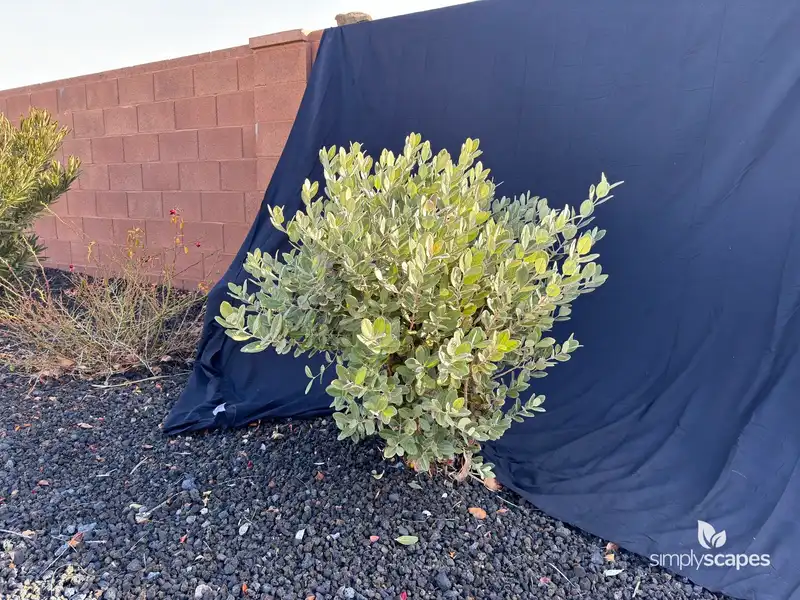
Pineapple guava
Acca sellowiana
Delicious fruit and stunning edible flowers.
- Plant Type
- Shrubs & Roses
- Width
- 10-15 Ft.
- Height
- 10-15 Ft.
- USDA hardiness zone
- 8 - 11
- Sun requirements
- Full Sun, Part Shade
- Design image count
- 1
Design images (1)

Bring your vision to life
The design images above are drag-and-drop ready — place this plant on a photo of your own yard and see it before you plant it.
Create design onlineAbout Pineapple guava
Pineapple guava is an evergreen shrub or small tree with silvery-backed leaves, showy flowers, and edible fruit. It can be grown as a hedge, specimen, or trained espalier, and its flowers and fall-ripening fruit add both ornamental and food-garden interest.
## Garden use
The [UF/IFAS profile](https://gardeningsolutions.ifas.ufl.edu/plants/edibles/fruits/pineapple-guava/) gives a typical mature size of 10–15 ft tall and wide. White to soft-pink petals surround burgundy stamens, and the petals are edible; egg-shaped fruit ripens in early fall and is ready to harvest when it drops or softens. The plant is especially useful in coastal gardens because it tolerates salt spray. UF/IFAS calls the accepted name Acca sellowiana and notes that older references use Feijoa sellowiana.
## Growing conditions
Grow in USDA Zones 8–11, in full sun or part shade and a range of soils, preferably slightly acidic. It usually needs little irrigation beyond rainfall once established, although prolonged drought can cause fruit and leaves to drop. Fruit production improves where plants receive some winter chill; seedlings may be slow to fruit and variable, so a grafted named cultivar is preferable when harvest is the priority. [UF/IFAS feijoa guidance](https://ask.ifas.ufl.edu/publication/HS1424) provides additional fruit-growing context.
## Maintenance
Prune lightly to maintain a hedge, shrub, or single-trunk tree form. Harvest fallen ripe fruit promptly and water during extended dry spells, particularly while fruit is developing.