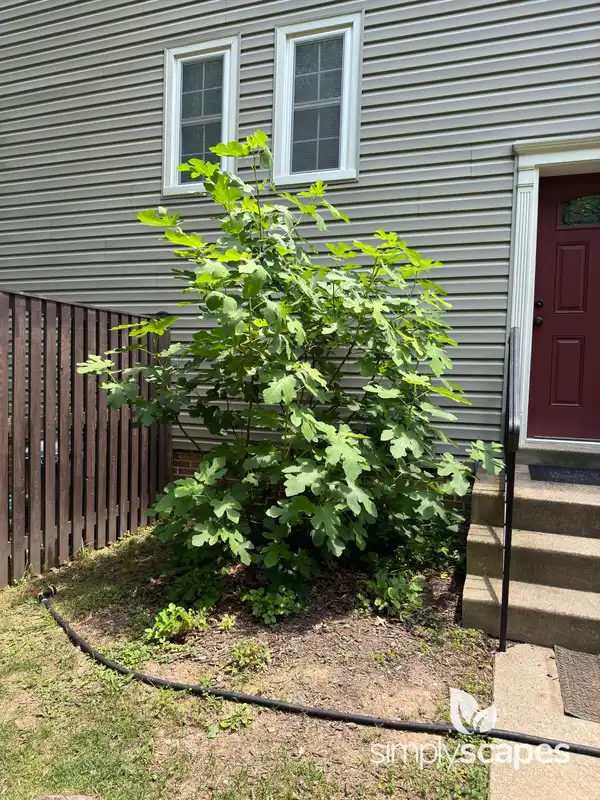
Fig Tree
Ficus carica
The classic Mediterranean fruit tree with iconic lobed leaves and sweet figs.
- Plant Type
- Flowering Trees
- Width
- 10-30 Ft.
- Height
- 15-32 Ft.
- USDA hardiness zone
- 6 - 9
- Sun requirements
- Full Sun, Part Shade
- Design image count
- 7
Design images (7)


Bring your vision to life
The design images above are drag-and-drop ready — place this plant on a photo of your own yard and see it before you plant it.
Create design onlineAbout Fig Tree
The common fig (*Ficus carica*) is a deciduous shrub or small tree with large, deeply lobed leaves and sweet edible fruit. Its size varies with cultivar, climate, and pruning; it can serve as both a productive garden plant and a broad-leaved focal point.
## Fruit and placement
Plants often reach roughly 10–30 feet tall and wide. Give a fig full sun to part shade and fertile, moist but well-drained soil. The small flowers remain hidden inside the developing fruit, which ripens mainly in late summer or fall; in North America, fruit commonly develops without pollination. Figs can be eaten fresh, cooked, dried, or preserved, and birds also feed on them. See [NC State Extension’s Common Fig guide](https://plants.ces.ncsu.edu/plants/ficus-carica/common-name/common-fig/) and the [Missouri Botanical Garden profile](https://www.missouribotanicalgarden.org/PlantFinder/PlantFinderDetails.aspx?taxonid=282762).
## Maintenance
Water through the growing season, mulch to conserve moisture, and prune lightly in winter if needed to control shape. Remove suckers if you want a single, orderly framework; allowing them to remain creates a broader, multi-stemmed plant. In colder regions, site the tree against a warm wall or grow it in a container that can be moved indoors for winter. Harvest fallen or overripe fruit promptly to reduce mess.