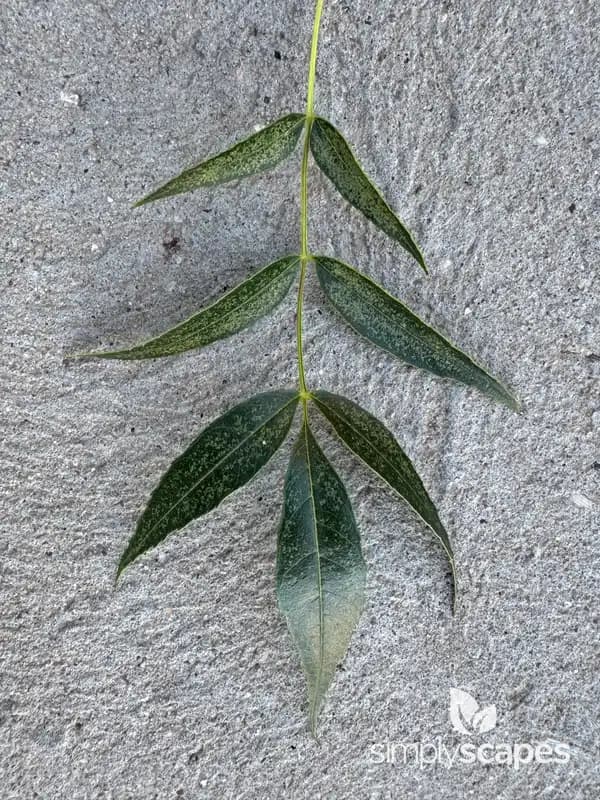
Ash Tree (Fraxinus)
Fraxinus
Majestic deciduous trees with iconic winged seeds.
- Plant Type
- Shade Trees
- Width
- 30-50 Ft.
- Height
- 40-60 Ft.
- USDA hardiness zone
- 3 - 9
- Sun requirements
- Full Sun, Part Shade
Bring your vision to life
The design images above are drag-and-drop ready — place this plant on a photo of your own yard and see it before you plant it.
Create design onlineAbout Ash Tree (Fraxinus)
Ash trees in the genus Fraxinus are deciduous broadleaf trees valued for their compound foliage, winged seeds, and shade. Species differ substantially in mature size, water needs, and climate range, so choose a species that fits the site rather than treating one ash profile as universal.
## Identification and landscape use
Ash trees usually have opposite, pinnately compound leaves and single-winged samaras. Many grow as large street or garden trees, but their mature height and crown shape vary by species and site. Most grow best in full sun, and regular moisture suits many species; flowering ash, Oregon ash, and foothill ash are exceptions that prefer infrequent summer water. [UC IPM ash guidance](https://ipm.ucanr.edu/home-and-landscape/ash/)
## Site and selection
Fraxinus species occur across North America, Europe, Asia, and parts of North Africa. Soil and moisture preferences vary, though many ash trees tolerate a range of soil textures when moisture remains available. Confirm the species before planning spacing, irrigation, or hardiness. [North Carolina Extension's genus profile](https://plants.ces.ncsu.edu/plants/fraxinus/) describes the family and broad site conditions, while [Oregon State's ash guide](https://treespnw.forestry.oregonstate.edu/broadleaf_genera/ash.html) explains the diagnostic foliage and samara.
## Maintenance
Inspect ash trees for local pest and disease concerns, including emerald ash borer where it occurs. Prune to remove dead or crossing branches and follow local arborist guidance for mature trees.