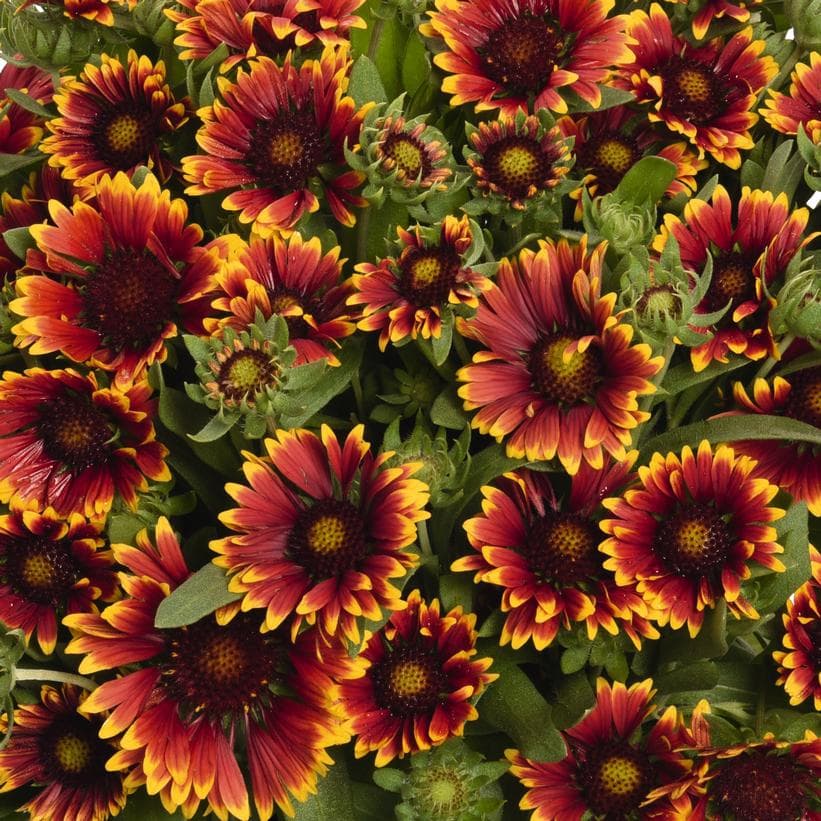
Spin Top Orange Halo Blanket Flower
Gaillardia aristata 'Bargaispinor' (SpinTop™ Orange Halo)
A compact, sun-loving perennial with fiery orange blooms and golden halos.
- Plant Type
- Perennials & Annuals
- Width
- 12-14 In.
- Height
- 12-14 In.
- USDA hardiness zone
- 5 - 9
- Sun requirements
- Full Sun, Part Shade
- Water requirements
- Low
- Design image count
- 2
Design images (2)


Bring your vision to life
The design images above are drag-and-drop ready — place this plant on a photo of your own yard and see it before you plant it.
Create design onlineAbout Spin Top Orange Halo Blanket Flower
SpinTop® Orange Halo is a compact blanket flower with low mounded foliage and upright stems carrying dark orange petals tipped in gold. The named selection is also recorded as Gaillardia aristata ‘Bargaispinor’; its flowers add a warm halo effect to summer borders and are useful for cutting.
## Garden Use
Dümmen Orange lists Orange Halo as a compact, mounding SpinTop variety. A selection profile gives a mature size of about 12–14 inches tall and wide, so it fits a sunny border edge, a container, or a small grouped planting. Its blooms attract butterflies and hummingbirds, and the flower stems can be cut for arrangements.
## Growing Conditions
Plant in full sun and freely draining, dry to average soil; avoid heavy ground that stays wet through winter. Water new plants until established, then reduce irrigation. The exact-selection profile lists USDA zones 5–9 and describes the plant as drought tolerant once established.
Sources: [Dümmen Orange](https://na.dummenorange.com/app/en/products/usa/gaillardia/spintop-orange-halo/PAT_62530), [Perennials.com](https://www.perennials.com/plants/gaillardia-aristata-spintop-orange-halo.html).
## Maintenance
Remove faded flower heads to encourage continued flowering. Divide clumps every two to three years in early spring if they become crowded, and cut back old stems after the flowering season. A few spent flowers can be left to form seed heads.