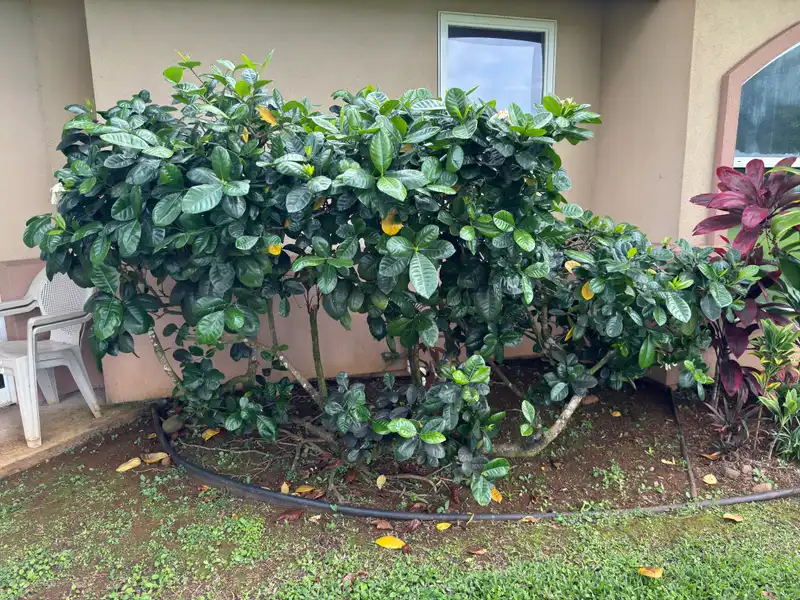
Gardenia Shrubs
Gardenia jasminoides
Elegant evergreen shrub featuring intoxicatingly fragrant white blooms and glossy leaves.
- Plant Type
- Shrubs & Roses
- Width
- 3-4 Ft.
- Height
- 4-6 Ft.
- USDA hardiness zone
- 8 - 11
- Sun requirements
- Full Sun, Part Shade
- Water requirements
- Medium
- Design image count
- 8
Design images (8)


Bring your vision to life
The design images above are drag-and-drop ready — place this plant on a photo of your own yard and see it before you plant it.
Create design onlineAbout Gardenia Shrubs
Gardenia jasminoides is a broadleaf evergreen shrub valued for glossy dark green foliage and fragrant, creamy white flowers. It is known as gardenia, Cape jasmine, Cape Jasmine gardenia, and Cape jessamine, and belongs to the Rubiaceae family; the species is native to southern China and Japan. [North Carolina State Extension](https://plants.ces.ncsu.edu/plants/gardenia-jasminoides/)
## Appearance and seasonal interest
The fragrant flowers are most prominent in spring and early summer, while evergreen leaves provide year-round structure. Cultivars differ in size, flower form, and bloom timing. Gardenias can be grown in the landscape or in containers. [Mississippi State University Extension](https://extension.msstate.edu/publications/gardenias-gardenia-jasminoides-for-the-farmer-florist) and [UF/IFAS Extension](https://ask.ifas.ufl.edu/publication/EP338).
## Growing conditions
Choose a site with bright light, from partial shade to sun, and shelter the shrub from cold winds where winters are severe. Gardenias grow best in rich, acidic, well-drained soil. Keep the root zone evenly moist without leaving it waterlogged; shallow roots are sensitive to disturbance, so minimize digging and competition from nearby tree roots. Prolonged shade can reduce flowering, and alkaline soil can cause yellowing foliage. [North Carolina State Extension](https://plants.ces.ncsu.edu/plants/gardenia-jasminoides/) and [UF/IFAS Extension](https://ask.ifas.ufl.edu/publication/EP338).
## Maintenance
Prune after flowering to shape the shrub and remove damaged growth, avoiding late hard pruning that can reduce the next flush of flowers. Remove spent flowers to encourage continued bloom, and monitor new leaves for yellowing, which can signal unsuitable soil pH or nutrient availability. [North Carolina State Extension](https://plants.ces.ncsu.edu/plants/gardenia-jasminoides/) and [Mississippi State University Extension](https://extension.msstate.edu/publications/gardenias-gardenia-jasminoides-for-the-farmer-florist).