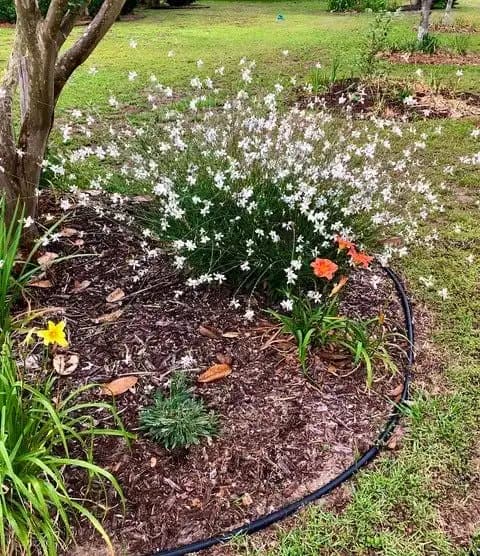
Whirling Butterflies
Gaura lindheimeri 'Whirling Butterflies'
Graceful white blooms dance like butterflies on airy stems for a long-lasting garden display.
- Plant Type
- Perennials & Annuals
- Width
- 24-36 In.
- Height
- 24-36 In.
- USDA hardiness zone
- 5 - 9
- Sun requirements
- Full Sun
- Water requirements
- Low
- Design image count
- 1
Design images (1)

Bring your vision to life
The design images above are drag-and-drop ready — place this plant on a photo of your own yard and see it before you plant it.
Create design onlineAbout Whirling Butterflies
‘Whirling Butterflies’ is a clump-forming perennial with slender stems that sway above its foliage. Rose-pink buds open into white, four-petaled flowers that fade softly to pink, appearing a few at a time from late spring into autumn. Plants commonly reach 2–3 feet tall and wide and are hardy in USDA zones 5–9. ([University of Maryland Extension](https://extension.umd.edu/sites/extension.umd.edu/files/2021-04/20Sep04L.pdf))
## Seasonal display
The airy flower wands add movement to sunny perennial plantings, while the narrow leaves form a modest clump at the base. Flowering continues for months rather than opening all at once, so the display changes as new buds emerge and older blooms fade. The cultivar is sterile, unlike the species, according to the extension profile. ([University of Maryland Extension](https://extension.umd.edu/sites/extension.umd.edu/files/2021-04/20Sep04L.pdf))
## Siting
Plant it in full sun and well-drained sandy or loamy soil. A strong taproot makes an established plant difficult to move; choose its position before planting. Rich soil can encourage tall stems to become floppy, so avoid overfeeding and allow space for the clump to spread. ([University of Maryland Extension](https://extension.umd.edu/sites/extension.umd.edu/files/2021-04/20Sep04L.pdf))
## Maintenance
Remove spent flower spikes to encourage a longer display. If stems become leggy, cut the plant back by about half in late spring. Leave enough air around the clump to reduce lodging and support its open form.