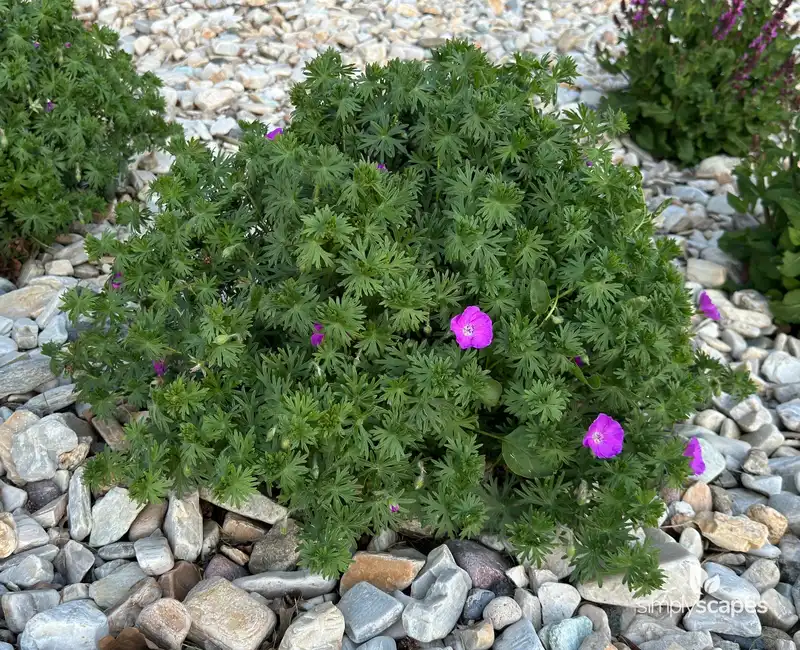
Bloody Crane's-bill
Geranium sanguineum
Vibrant magenta blooms and fiery red fall foliage on a hardy, low-maintenance mound.
- Plant Type
- Perennials & Annuals
- Width
- 18-24 In.
- Height
- 12-18 In.
- USDA hardiness zone
- 3 - 9
- Sun requirements
- Full Sun, Part Shade
- Water requirements
- Moderate
- Design image count
- 11
Design images (11)


Bring your vision to life
The design images above are drag-and-drop ready — place this plant on a photo of your own yard and see it before you plant it.
Create design onlineAbout Bloody Crane's-bill
Bloody cranesbill is a clump-forming perennial with finely cut leaves and magenta to purple flowers in late spring. Its foliage often turns red in fall, extending interest after the main flowering period. [Missouri Botanical Garden](https://www.missouribotanicalgarden.org/PlantFinder/PlantFinderDetails.aspx?isprofile=0&pt=8&taxonid=280851) describes a 9–18 inch height, a spread that can reach 24 inches, and USDA Zones 3–9.
## Garden Use
Use it at the front of a border, in a rock garden, or as a low ground cover. The hairy stems trail outward from the central mound, while solitary flowers rise above the deeply lobed foliage. It prefers full sun to partial shade and typically flowers most heavily in May and June, with variable lighter rebloom later in summer.
## Growing Conditions
Average, medium-moisture soil with good drainage supports vigorous growth. It tolerates some drought once established, though growth is strongest with consistent moisture. Avoid waterlogged sites and allow enough room for the spreading stems.
## Maintenance
Deadheading is generally unnecessary for larger plantings. Remove side stems if the plant needs to stay within its allotted space, and lightly shear foliage after flowering to refresh the mound.