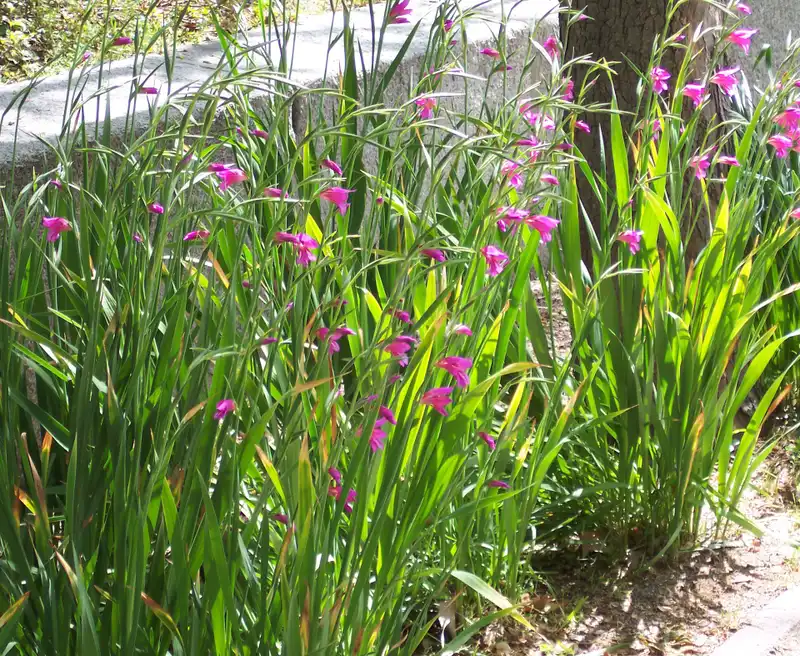
Gladiolus
Gladiolus communis
A vibrant Mediterranean perennial with striking magenta spikes for sunny borders.
- Plant Type
- Perennials & Annuals
- Width
- 12 In.
- Height
- 24 In.
- USDA hardiness zone
- 6 - 10
- Sun requirements
- Full Sun
- Design image count
- 1
Design images (1)

Bring your vision to life
The design images above are drag-and-drop ready — place this plant on a photo of your own yard and see it before you plant it.
Create design onlineAbout Gladiolus
Gladiolus communis is a corm-forming perennial with sword-shaped leaves and upright spikes of funnel-shaped, pink flowers. It is native to the Mediterranean region and nearby western Asia, and is sometimes called eastern gladiolus or common corn-flag. Its narrow foliage and vertical flower stems suit an informal sunny border.
## Garden Use and Size
George Washington's Mount Vernon lists this species at about 2 feet tall and 1 foot wide, with flowers in June and July. Plant corms in groups for a stronger display or use the stems as cut flowers. The flowers rise above the leaves, so place the clump where neighboring plants will not hide the spikes.
## Site and Seasonal Interest
Choose a sunny, open site with free-draining soil. Kew records the species as a corm-forming geophyte from the western and central Mediterranean, Crimea, and Caucasus. Gladiolus hardiness varies by species and site; the [RHS growing guide](https://www.rhs.org.uk/plants/gladioli/growing-guide) advises attention to drainage and winter protection where needed. The [Mount Vernon plant profile](https://www.mountvernon.org/the-estate-gardens/gardens-landscapes/plant-finder/item/byzantine-gladiolus) gives the local size and June–July bloom details.
## Maintenance
Keep soil from staying waterlogged, especially while the corm is dormant. Allow foliage to die back naturally after flowering so the corm can replenish. In colder or wet-winter gardens, lift and store corms dry and frost-free; in milder, well-drained sites, they may remain in the ground. Remove spent flower stems and leave the leaves until they yellow.