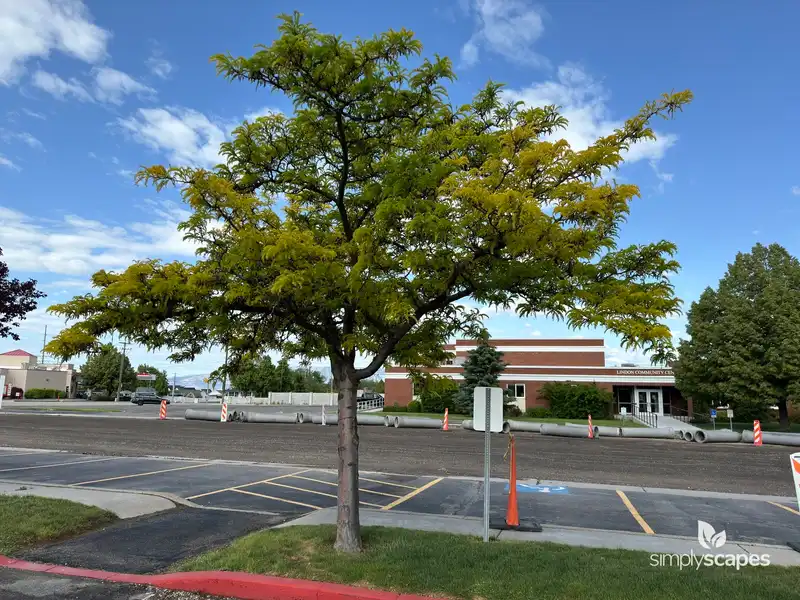
Honeylocust Tree
Gleditsia triacanthos
A fast-growing, hardy shade tree with delicate, airy foliage.
- Plant Type
- Shade Trees
- Width
- 30-50 Ft.
- Height
- 60-80 Ft.
- USDA hardiness zone
- 3 - 9
- Sun requirements
- Full sun
- Design image count
- 9
Design images (9)


Bring your vision to life
The design images above are drag-and-drop ready — place this plant on a photo of your own yard and see it before you plant it.
Create design onlineAbout Honeylocust Tree
Honeylocust is a large, fast-growing deciduous tree native to central and eastern North America. Its open crown casts filtered shade, while finely divided compound leaves turn yellow in autumn; the species also bears large thorns and long, twisted pods that can create cleanup work.
## Garden use
Use the species where a broad canopy and dappled light are wanted, with ample space for roots and branches. North Carolina State Extension gives a mature height and spread of about 60–80 feet. Its thorny branches and abundant pods make the straight species a poor fit for many streets and small residential gardens; thornless cultivars are often chosen for those settings.
## Growing conditions
Plant in full sun and well-drained soil. Honeylocust adapts to clay, loam, and other soil types and tolerates heat, drought, and wind. Small spring flowers attract bees, butterflies, and moths; female trees may produce numerous reddish-brown pods that persist into winter.
## Maintenance
Prune to establish a strong structure and remove damaged or crossing branches while the tree is young. Plan for periodic pod cleanup, and avoid planting where falling pods or thorns create a hazard. [NC State Extension plant profile](https://plants.ces.ncsu.edu/plants/gleditsia-triacanthos/common-name/honeylocust/) · [Missouri Botanical Garden tree guide](https://www.missouribotanicalgarden.org/gardens-gardening/your-garden/help-for-the-home-gardener/advice-tips-resources/visual-guides/native-trees-for-missouri).