Holywood
Guaiacum sanctum
A slow-growing tropical gem with stunning blue flowers and iron-hard wood.
- Plant Type
- Flowering Trees
- Width
- 8-12 Ft.
- Height
- 10-30 Ft.
- USDA hardiness zone
- 10 - 11
- Sun requirements
- Full Sun, Part Shade
- Design image count
- 1
Design images (1)

Bring your vision to life
The design images above are drag-and-drop ready — place this plant on a photo of your own yard and see it before you plant it.
Create design onlineAbout Holywood
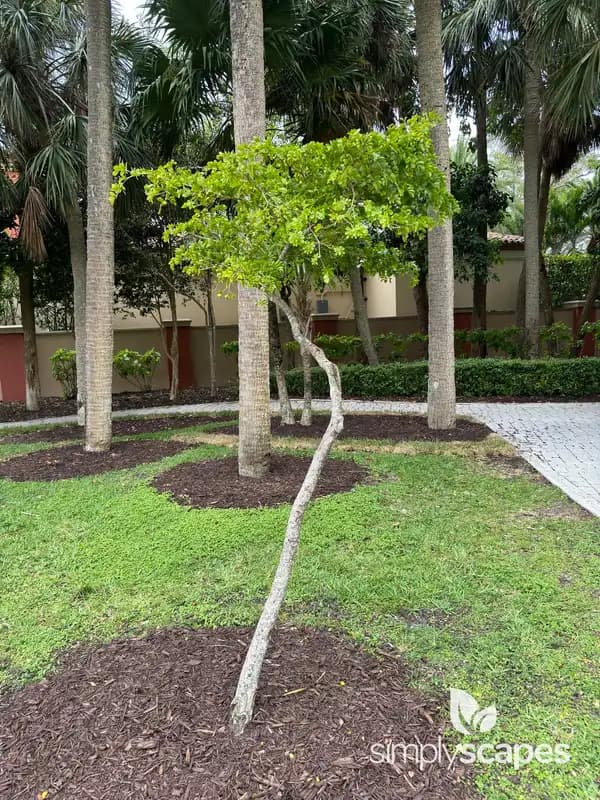
Holywood, Guaiacum sanctum, is a slow-growing evergreen tree with a rounded crown and blue-purple flowers. It is usually seen as a compact, multi-trunked plant, while old specimens can become much larger. UF/IFAS describes it for warm landscapes, containers, patios, and specimen planting. [UF/IFAS plant profile](https://ask.ifas.ufl.edu/publication/ST286)
## Form and seasonal interest
Expect about 10–30 ft of height and 8–12 ft of spread, with the smaller size more typical in cultivation. Leathery dark-green leaflets stay on the tree, and flower clusters appear through the year with the heaviest display in spring. Yellow-orange capsules add a second ornamental feature. The rounded outline and fine texture work well as a focal point where the slow growth can be appreciated.
## Siting and growing
Plant in full sun or partial shade in well-drained soil; UF/IFAS lists tolerance of sand, loam, clay, and both acidic and alkaline soils. It is hardy in USDA zones 10B–11. Once established, it tolerates drought. A Florida Keys guide reports moderate tolerance of windborne salt but advises protection from direct spray, so choose a sheltered coastal position.
## Maintenance
Water consistently during establishment, then reduce irrigation as roots settle. Allow room for its mature spread and prune selectively to build a sound framework; avoid frequent shaping. This slow-growing tree needs little routine attention after establishment. [UF/IFAS Extension](https://ask.ifas.ufl.edu/publication/ST286) · [UF/IFAS Monroe County guide](https://sfyl.ifas.ufl.edu/media/sfylifasufledu/monroe/docs/Lignumvitae-Guaiacum-sanctum.pdf)