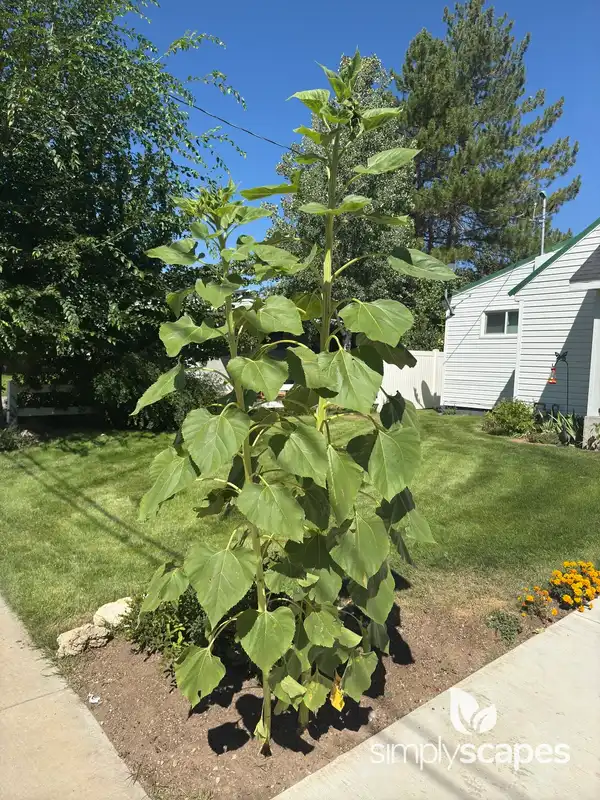
Sunflower
Helianthus
Cheerful, sun-loving blooms that attract pollinators and brighten any landscape.
- Plant Type
- Perennials & Annuals
- Width
- 12-36 In.
- Height
- 3-10 Ft.
- USDA hardiness zone
- 2 - 11
- Sun requirements
- Full Sun
- Design image count
- 3
Design images (3)


Bring your vision to life
The design images above are drag-and-drop ready — place this plant on a photo of your own yard and see it before you plant it.
Create design onlineAbout Sunflower
Helianthus is a genus of annual and perennial plants commonly called sunflowers, with forms ranging from low spreading plants to tall upright stems. Species and cultivars differ widely in mature size, flower color, bloom timing, and moisture needs. Their showy flower heads bring a strong late-season display, and many kinds provide food for pollinators and birds. [North Carolina Extension Gardener Plant Toolbox](https://plants.ces.ncsu.edu/plants/helianthus/common-name/sunflower/)
## Site and planting
Choose full sun for the best flowering. Many garden sunflowers prefer fertile, well-drained soil, though moisture tolerance varies by species. Check the named species or cultivar before planning spacing or irrigation, since genus-level sizes range from compact forms to plants several feet tall. Use taller selections toward the back of borders or in cut-flower beds, and leave enough room for their mature stems and flower heads. [Iowa State Extension: Growing Sunflowers and Their Varieties](https://yardandgarden.extension.iastate.edu/how-to/growing-sunflowers-and-their-varieties)
## Seasonal interest
Bloom time and flower color depend on the taxon. Many sunflowers flower in summer or fall, with some selections continuing until frost. The genus includes annual and perennial plants, and its flower heads vary in size and color; do not assume every sunflower is a tall annual with yellow petals.
## Maintenance
Water seedlings until roots establish, then adjust irrigation to the species and local conditions. Tall plants with large flower heads may need support. Where practical, leave some spent stems or seed heads standing through winter: birds feed on sunflower seeds, and native bees use hollow stems. Cut back old stems in spring, leaving some standing where they can continue to provide habitat. [USDA Plant Guide: Annual Sunflower](https://plants.sc.egov.usda.gov/DocumentLibrary/plantguide/pdf/cs_hean3.pdf)