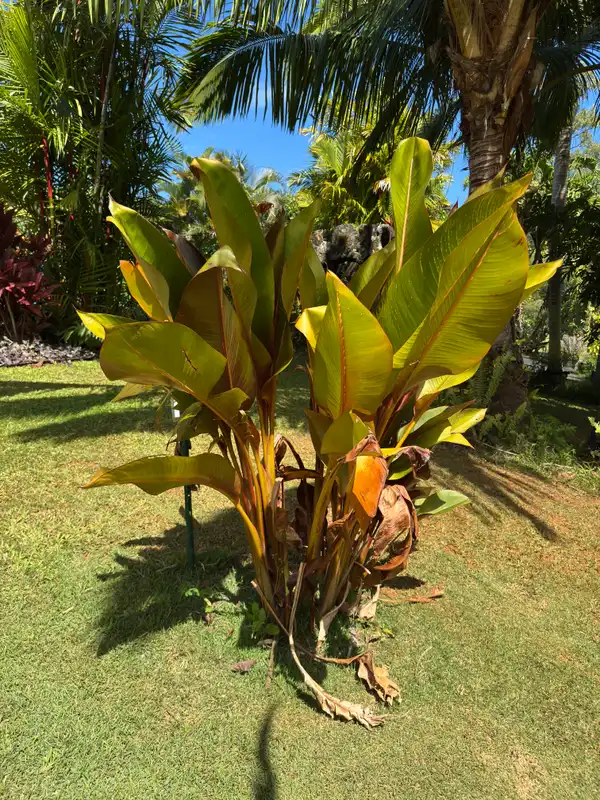
Upright Heliconia
Heliconia orthotricha
- Plant Type
- House Plants & Tropicals
- Width
- About 5 ft per clump
- Height
- 5–6 ft
- USDA hardiness zone
- 10 - 11
- Sun requirements
- Full Sun, Part Shade
- Water requirements
- High
- Design image count
- 5
Design images (5)


Bring your vision to life
The design images above are drag-and-drop ready — place this plant on a photo of your own yard and see it before you plant it.
Create design onlineAbout Upright Heliconia
Upright heliconia is a tropical, rhizomatous perennial grown for its erect red bracts, dark maroon or green edging, and broad banana-like leaves. The National Tropical Botanical Garden describes Heliconia orthotricha selections at roughly 5–6 feet tall, with velvety bracts and a long flowering season. [Its plant profile](https://ntbg.org/database/plants/detail/heliconia-orthotricha) also notes that the species grows from full sun to light shade.
## Placement and care
Give this heliconia a warm, sheltered position with bright light and fertile soil that stays evenly moist. Its broad leaves and upright flower stalks make a strong focal point beside a pool, in a tropical border, or in a large conservatory. A clump about five feet across needs room to develop. Heliconias perform best where frost is rare; in colder regions grow them in a spacious container that can be protected.
## Seasonal display
The colorful bracts hold their appearance well and can be cut for floral arrangements. The true flowers are small and sit within the showy bracts. The species is accepted as Heliconia orthotricha by [Kew’s Plants of the World Online](https://powo.science.kew.org/taxon/urn:lsid:ipni.org:names:900051-1/general-information).
## Maintenance
Keep the root zone consistently moist during active growth and feed with a balanced fertilizer in the warm growing season. Remove spent flower stalks and damaged leaves at the base. Watch the clump’s edge and divide rhizomes when it becomes crowded.