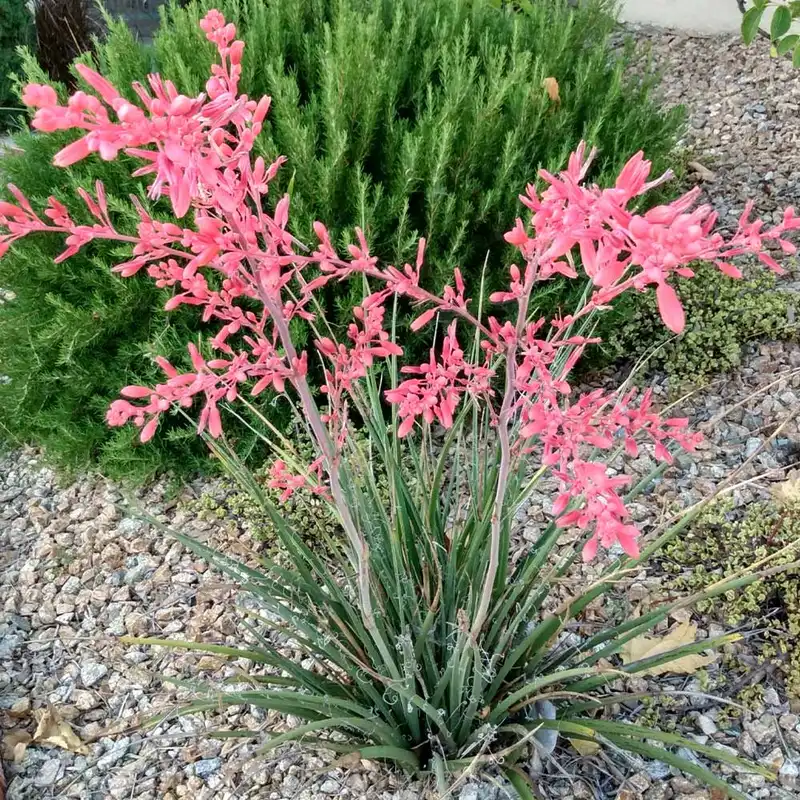
Red Yucca Little Giant
Hesperaloe x funifera 'Little Giant'
A compact, heat-loving succulent with stunning pink blooms for water-wise landscapes.
- Plant Type
- Succulents
- Width
- 4 Ft.
- Height
- 4 Ft.
- USDA hardiness zone
- 6 - 11
- Sun requirements
- Full Sun
- Design image count
- 1
Design images (1)

Bring your vision to life
The design images above are drag-and-drop ready — place this plant on a photo of your own yard and see it before you plant it.
Create design onlineAbout Red Yucca Little Giant
Little Giant is a compact, clumping Hesperaloe hybrid valued for its evergreen, grass-like rosettes and large pink-and-cream flowers. A five-year-old patented plant measured about 4 feet tall and 5 feet wide in foliage, with flower stalks reaching about 7 feet; nursery descriptions place the compact foliage clump near 3 to 4 feet. This selection brings strong form and seasonal color to hot, sunny gardens.
## Flowers and Form
Upright flower stalks rise above narrow, dark green leaves with curled white fibers along their margins. The patent describes the parentage as Hesperaloe funifera crossed with H. parviflora and records pink-and-cream flowers from spring into early summer; its cultivar identity is ‘Little Giant’ ([plant patent profile](https://www.hort.net/pedia/patent/grant/35283/)). The flowering rosette continues to grow rather than dying after bloom, and the plant can form a wider clump over time ([Desert Horizon Nursery](https://www.deserthorizonnursery.com/plant/little-giant-hesperaloe/)).
## Siting and Water
Plant in full sun and well-drained sandy, gravelly, or rocky soil. Give the clump room to spread and place it where its long leaves will not crowd a path. During establishment, water deeply; once established, let the soil dry between waterings and reduce irrigation in winter.
## Maintenance
Little Giant needs little routine pruning. Remove damaged leaves and spent stalks at the base with gloves and clean tools, taking care around the fibrous leaf edges. Avoid persistently wet soil, which can harm the crown.