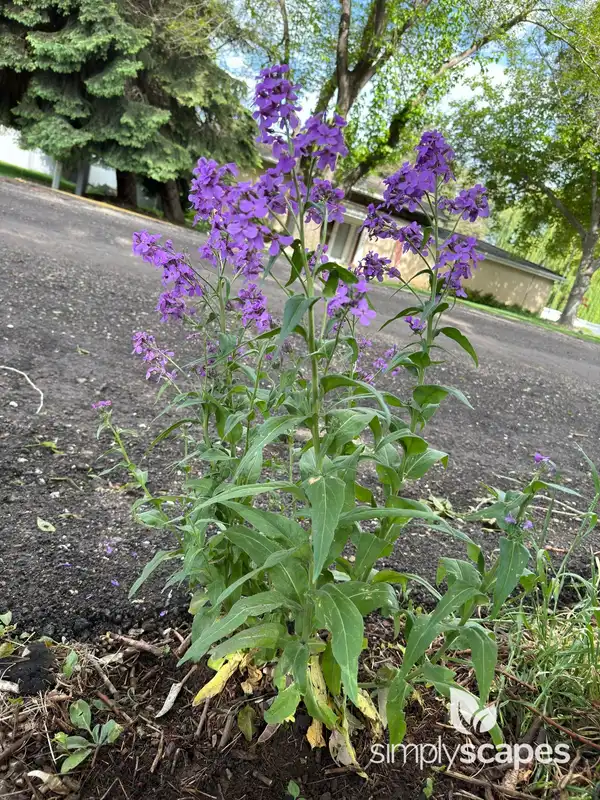
Dame's rocket
Hesperis matronalis
Fragrant, old-fashioned blooms for the evening garden.
- Plant Type
- Annuals
- Width
- 1-2 Ft.
- Height
- 2-4 Ft.
- USDA hardiness zone
- 3 - 9
- Sun requirements
- Full Sun, Part Shade
- Design image count
- 1
Design images (1)

Bring your vision to life
The design images above are drag-and-drop ready — place this plant on a photo of your own yard and see it before you plant it.
Create design onlineAbout Dame's rocket
Dame’s rocket (Hesperis matronalis) is a fragrant biennial or short-lived perennial with upright stems and clusters of four-petaled flowers. Blooms may be white, lavender, purple, or pinkish-purple, and their evening scent is especially noticeable. Although it has a traditional cottage-garden look, it self-seeds readily and is invasive in parts of North America.
## Flowers and Growth
Plants usually form a low leaf rosette in their first year, then send up flowering stems about 2 to 4 feet tall. Flowering commonly begins in late spring and can continue into summer, with timing varying by climate; the flowers have four petals, which helps distinguish them from five-petaled garden phlox. The [North Carolina Extension Plant Toolbox](https://plants.ces.ncsu.edu/plants/hesperis-matronalis/common-name/garden-rocket/) describes its evening fragrance and self-seeding, while [Wisconsin Horticulture Extension](https://hort.extension.wisc.edu/articles/dames-rocket/) documents its abundant seed production and spread.
## Siting and Spread
It grows in full sun or partial shade and tolerates average, well-drained soil. Check local invasive-plant guidance before planting, particularly near natural areas. Where it is already established, remove flower heads before seed forms or pull plants and dispose of flowering material carefully so seed does not spread.
## Maintenance
Monitor plants before and after flowering, because new seedlings can appear beyond the original clump. Cut flower stems before pods mature if seed spread is unwanted, and remove seedlings while small. Do not include mature seed heads in compost.