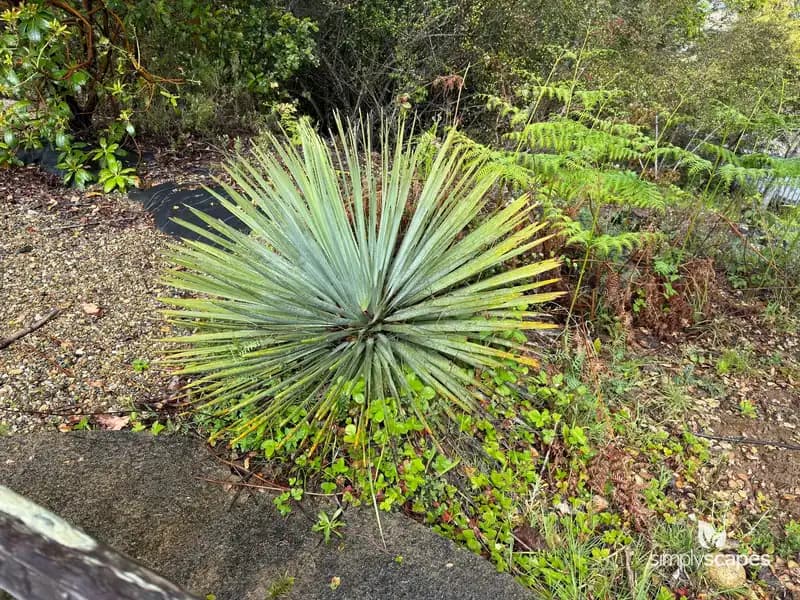
Chaparral yucca
Hesperoyucca whipplei
A dramatic desert succulent with towering white flower spikes.
- Plant Type
- Succulents
- Width
- 2-4 Ft.
- Height
- 10-15 Ft.
- USDA hardiness zone
- 7 - 11
- Sun requirements
- Full Sun
- Design image count
- 4
Design images (4)


Bring your vision to life
The design images above are drag-and-drop ready — place this plant on a photo of your own yard and see it before you plant it.
Create design onlineAbout Chaparral yucca
Chaparral yucca (Hesperoyucca whipplei) forms a sculptural rosette of rigid, sharply pointed leaves and sends up a dramatic flower stalk when mature. The foliage rosette is only a few feet tall, while the flowering display can rise much higher; flowering usually takes several years and the rosette dies afterward. This California native is best suited to sunny, dry sites with excellent drainage.
## Form and Flowering
The blue-gray leaves have dangerous sharp tips, so leave generous clearance from walks, patios, and play areas. Mature plants produce fragrant, creamy-white flowers in late spring or summer on tall spikes; after blooming, offsets may continue the planting around the spent rosette. The [Waterwise Garden Planner](https://waterwisegardenplanner.org/plants/hesperoyucca-whipplei/) describes flowering spikes 6 to 12 feet tall, while [California Flora Nursery](https://www.calfloranursery.com/plants/hesperoyucca-whipplei/) notes the dense rosette, delayed flowering, and sharp leaf tips.
## Siting and Water
Give the rosette space to reach its mature spread and plant it in a sunny position with fast-draining soil. It tolerates light shade, but heavy or standing moisture is a poor fit. Once established in a suitable dry climate, it needs little supplemental summer water.
## Maintenance
Do not prune healthy leaves to make the plant fit a tight location; select a safer site instead. After the main rosette flowers and declines, remove it when fully dead and retain healthy offsets if present. Wear eye and hand protection when working near the pointed foliage.