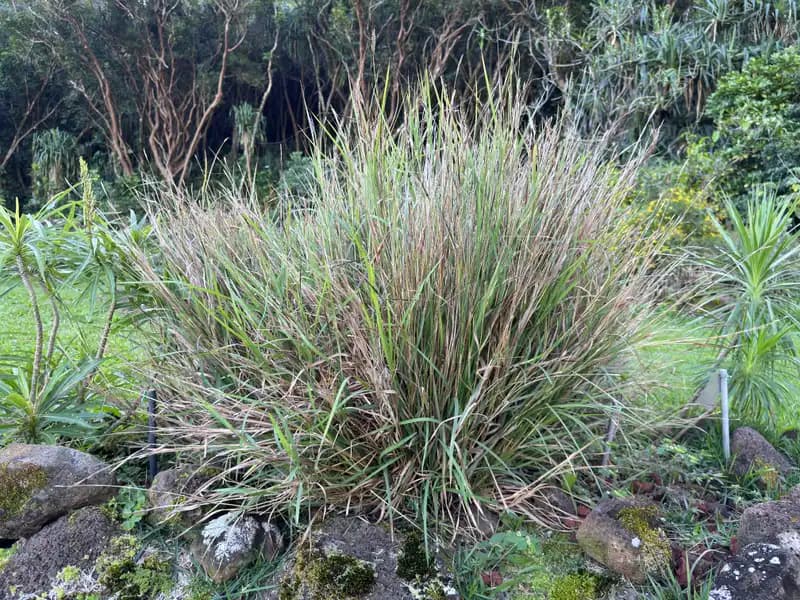
Pili Grass
Heteropogon contortus
- Plant Type
- Ornamental Grasses
- Width
- 2–5 ft
- Height
- 1.7–3.3 Ft.
- USDA hardiness zone
- 9 - 11
- Sun requirements
- Full Sun, Part Shade
- Water requirements
- Low
- Design image count
- 1
Design images (1)

Bring your vision to life
The design images above are drag-and-drop ready — place this plant on a photo of your own yard and see it before you plant it.
Create design onlineAbout Pili Grass
A clumping warm-season bunchgrass, pili is indigenous in Hawaiʻi and grows across tropical and warm-temperate regions. Its narrow leaves and contorted seed awns bring a fine-grained texture to sunny, dry sites; upright and prostrate forms can look quite different.
## Landscape Use
Use pili as a drought-adapted accent, on a rocky slope, or in grouped plantings for erosion control. Closely spaced clumps can create a tall groundcover or low hedge; allow room for its 2–5 foot spread and keep the seed heads away from narrow paths where their hooked awns may catch on clothing or fur. [Native Plants of Hawaiʻi](https://www.nativeplantsofhawaii.org/h/heteropogon-contortus) describes its growth forms and landscape uses.
## Growing Conditions
Full sun and well-drained soil suit this grass. Water through establishment; established plants tolerate dry conditions, though regular irrigation keeps the foliage greener. Pili also tolerates heat, wind, and salt spray in exposed Hawaiian settings. The [University of Hawaiʻi range-grass bulletin](https://www.ctahr.hawaii.edu/oc/freepubs/pdf/b-65.pdf) records a 20–40 inch height and the characteristic tangled seed head. [Texas A&M AgriLife](https://rangeplants.tamu.edu/plant/tanglehead/) describes its bunchgrass habit and adaptation to low-rainfall sites.
## Maintenance
Remove dead or damaged foliage when needed and leave space for air to move through the clump. Avoid keeping the crown wet; use only enough irrigation to support establishment or the appearance you want.