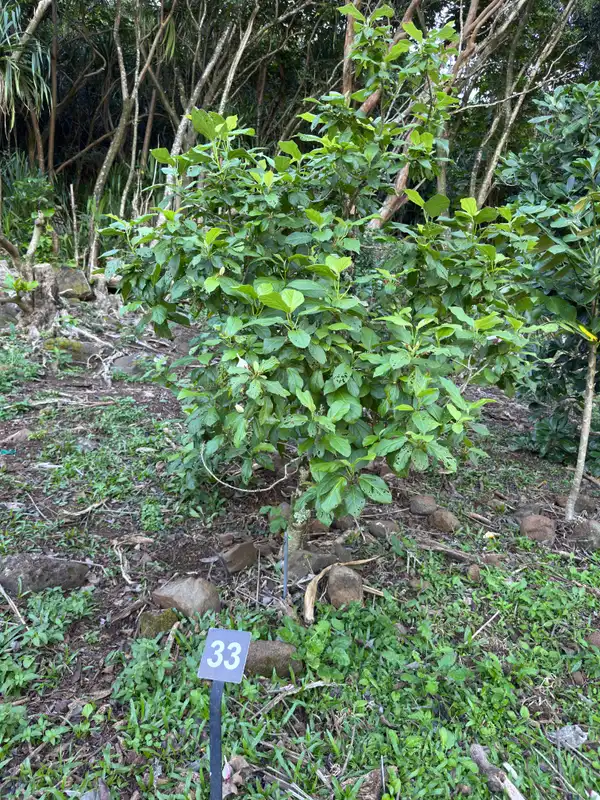
Small Kauaʻi White Hibiscus
Hibiscus hannerae
- Plant Type
- Shrubs & Roses
- Width
- 12–14 ft
- Height
- 6–33 ft, depending on form
- USDA hardiness zone
- 10 - 11
- Sun requirements
- Full Sun, Part Shade
- Water requirements
- Low
- Design image count
- 4
Design images (4)


Bring your vision to life
The design images above are drag-and-drop ready — place this plant on a photo of your own yard and see it before you plant it.
Create design onlineAbout Small Kauaʻi White Hibiscus
Small Kauaʻi White Hibiscus is the accepted species *Hibiscus hannerae*, a Kauaʻi-endemic shrub or small tree from wet tropical habitats. Bishop Museum records describe white, fragrant flowers and plants in mesic forest and constantly moist riparian sites; [Kew](https://powo.science.kew.org/taxon/urn:lsid:ipni.org:names:77369841-1) recognizes the current species name, and [Plants of Hawaiʻi](https://plantsofhawaii.org/detail/%7BF8CA290D-0DFD-4D1C-B748-7A81385BD995%7D) lists it as critically endangered.
## Habitat and placement
Use this as a botanical specimen in a warm, sheltered tropical garden or conservation collection, with room for a woody crown. Field observations include individual plants about 18–28 ft tall; treat those measurements as habitat context rather than a uniform garden-size promise. Some records describe partial canopy and wet or mesic forest, so bright filtered light and consistently moist ground are sensible starting conditions.
## Growing conditions
Favor moisture-retentive organic soil and protect the root zone from prolonged drying. The recorded habitat includes wet tropical forest and constantly moist gorge sites, rather than cold-temperate conditions. A protected, humid setting is the best match for the plant’s native ecology.
## Maintenance
Maintain even moisture through warm weather and use organic mulch to moderate the root zone. Remove dead or crossing branches as needed while retaining the plant’s natural woody framework. Because this Kauaʻi endemic is conservation-sensitive, choose nursery-grown material and leave wild populations undisturbed.