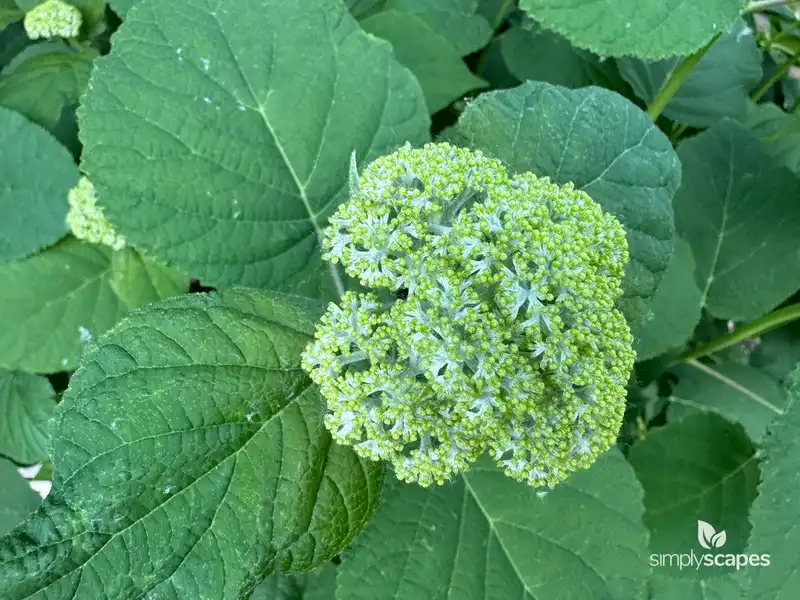
Smooth Hydrangea
Hydrangea arborescens
A resilient native shrub with stunning white summer blooms.
- Plant Type
- Shrubs & Roses
- Width
- 3-5 Ft.
- Height
- 3-5 Ft.
- USDA hardiness zone
- 3 - 9
- Sun requirements
- Full Sun, Part Shade
- Design image count
- 2
Design images (2)


Bring your vision to life
The design images above are drag-and-drop ready — place this plant on a photo of your own yard and see it before you plant it.
Create design onlineAbout Smooth Hydrangea
Smooth hydrangea (Hydrangea arborescens) is a native eastern North American, deciduous shrub with a rounded, multi-stem habit, generally 3–5 feet tall and wide. The wild type produces small white fertile flowers in flattened clusters, sometimes edged with showier sterile florets; flowering is strongest from late spring through summer, and leaves may turn yellow in fall. [NC State Extension](https://plants.ces.ncsu.edu/plants/hydrangea-arborescens/common-name/smooth-hydrangea/) describes its native range, size and wildlife value.
## Site and garden use
Plant it in moist, well-drained soil in full sun or partial shade. In sunny or hot sites, provide consistent moisture. The shrub fits woodland, shade and rain gardens, and works in borders, hedges or mass plantings. Wild smooth hydrangea flowers attract butterflies and other pollinators, and the species is a host plant for the hydrangea sphinx moth.
## Flowering and pruning
Smooth hydrangea flowers on new wood, so it can be pruned while dormant in fall, winter or early spring. Very hard cutting can produce weaker young stems that struggle to support heavy flower heads; leaving some older framework helps stems thicken over time. [UConn's hydrangea guide](https://homegarden.cahnr.uconn.edu/factsheets/hydrangea/) explains the timing and trade-off for Annabelle-type smooth hydrangeas.
## Maintenance
Water during dry spells, especially where it receives full sun. Remove dead or damaged stems during dormant-season cleanup, and prune to shape or renew the shrub before spring growth begins.