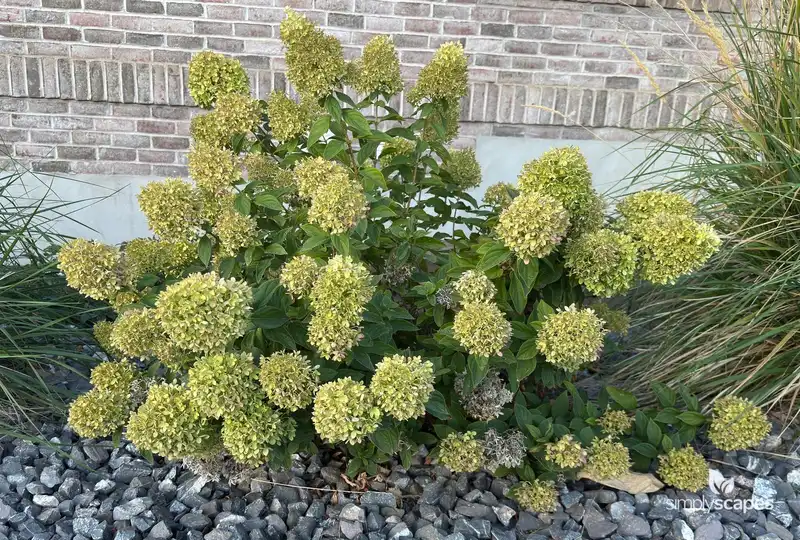
Panicle Hydrangea
Hydrangea paniculata
A deciduous, multi-stemmed hydrangea with large summer-to-fall flower panicles that age from creamy white through pink to tan.
- Plant Type
- Shrubs & Roses
- Width
- 6-12 Ft.
- Height
- 6-15 Ft.
- USDA hardiness zone
- 3 - 8
- Sun requirements
- Full Sun, Part Shade
- Design image count
- 23
Design images (23)


Bring your vision to life
The design images above are drag-and-drop ready — place this plant on a photo of your own yard and see it before you plant it.
Create design onlineAbout Panicle Hydrangea
Panicle hydrangea (Hydrangea paniculata) is a deciduous, multi-stemmed shrub or small tree grown for large cone-shaped flower clusters. The creamy-white blooms open in summer and may color pink and then tan-brown as they age, above toothed, dark-green leaves.
## Seasonal Display and Form
Showy panicles rise at branch tips and continue into fall. North Carolina State reports typical heights of 8–15 feet, with plants sometimes reaching 25 feet; the Royal Horticultural Society lists 2.5–4 metres tall and 1.5–2.5 metres wide. These are species-level ranges, and named cultivars can have different mature sizes. [NC State Extension](https://plants.ces.ncsu.edu/plants/hydrangea-paniculata/) · [RHS](https://www.rhs.org.uk/plants/8944/hydrangea-paniculata/details)
## Siting and Uses
Panicle hydrangea is more tolerant of full sun than many hydrangeas; morning sun with afternoon shade is a good starting point, while a sunny site suits it if the soil remains reliably moist. Give it moist but well-drained ground; RHS lists clay, loam and sand, while NC State recommends neutral-to-acidic soil. Its large, coarse-textured form works as a border or hedge, a specimen, or in cutting and pollinator gardens. [NC State Extension](https://plants.ces.ncsu.edu/plants/hydrangea-paniculata/) · [RHS](https://www.rhs.org.uk/plants/8944/hydrangea-paniculata/details)
## Maintenance
Flowers form on new growth, so prune in late winter or spring. If the dry tan flowerheads are part of the winter display, wait until late winter before cutting them back. The shallow roots benefit from mulch, and the brittle stems can be damaged by wind; choose a reasonably sheltered position. [NC State Extension](https://plants.ces.ncsu.edu/plants/hydrangea-paniculata/) · [University of Minnesota Extension](https://extension.umn.edu/garden-and-home/yard-and-garden/lawns-and-landscapes-in-minnesota/trees-and-shrubs/pruning-hydrangeas)