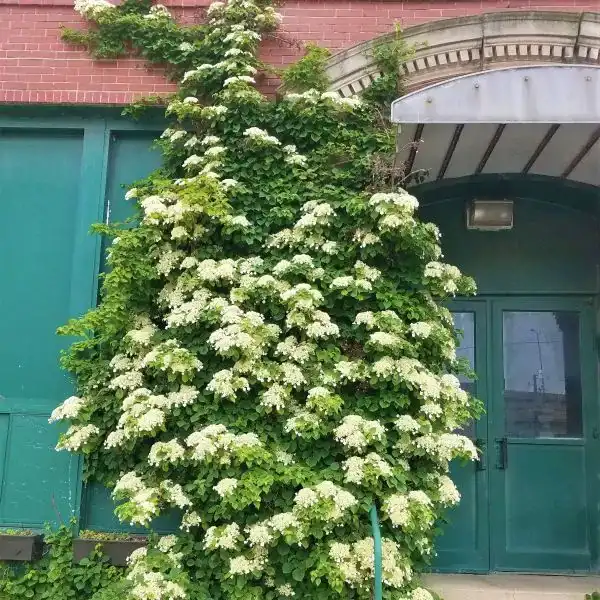
Climbing Hydrangea
Hydrangea anomala subsp. petiolaris
A vigorous, self-clinging vine with lush foliage and elegant white lacecap blooms.
- Plant Type
- Shrubs & Roses
- Width
- 30-50 Ft.
- Height
- 30-60 Ft.
- USDA hardiness zone
- 4 - 8
- Sun requirements
- Full Sun, Part Shade, Full Shade
Bring your vision to life
The design images above are drag-and-drop ready — place this plant on a photo of your own yard and see it before you plant it.
Create design onlineAbout Climbing Hydrangea
Hydrangea anomala subsp. petiolaris is a self-clinging, deciduous woody vine for a sturdy wall, tree or other support, as described in the [NC State Extension profile](https://plants.ces.ncsu.edu/plants/hydrangea-petiolaris/common-name/japanese-climbing-hydrangea/) and [Royal Horticultural Society profile](https://www.rhs.org.uk/plants/97624/hydrangea-anomala-subsp-petiolaris). It bears flat white lacecap clusters in late spring and summer, and its green leaves turn yellow before dropping, leaving exfoliating bark visible in winter.
## Site and growth
Give the vine moist but well-drained soil and a sound support; it grows in sun or shade, though full shade can reduce flowering. NC State lists USDA zones 4–8 and mature climbing height of 30–60 feet. It can be slow to establish and may take several years to begin flowering, so allow space and do not expect it to cover a wall immediately. Its fragrant flower clusters contain small fertile flowers surrounded by showier sterile florets.
## Training and pruning
Direct young shoots onto a sturdy fence, arbor or wall until aerial rootlets hold them in place. This species flowers on older wood: let it establish for its first two or three years, then prune after flowering only when shoots extend beyond the intended area. [UConn's hydrangea guide](https://homegarden.cahnr.uconn.edu/factsheets/hydrangea/) notes that early-summer pruning removes potential flowers.
## Maintenance
Water during extended dry weather and keep the root zone evenly moist without leaving it waterlogged. Remove only dead, damaged or unwanted growth after bloom, preserving the next season's flowering stems.