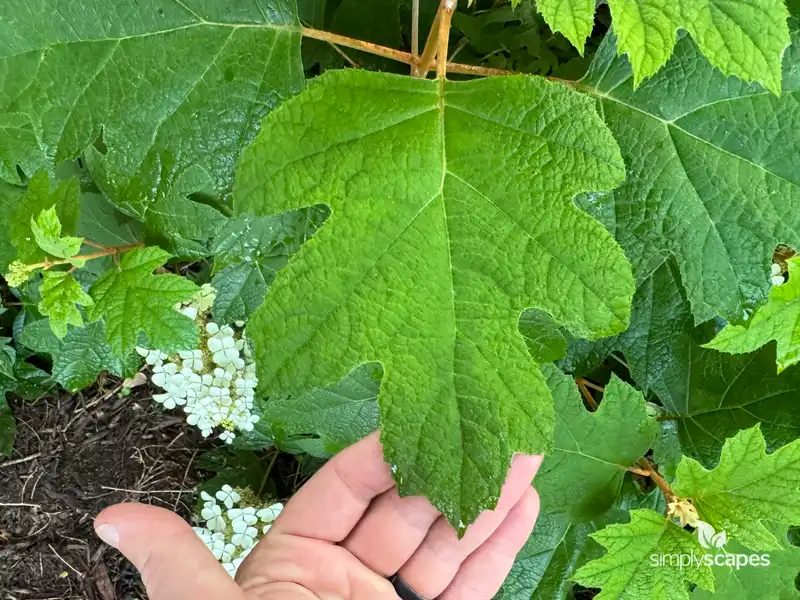
Oakleaf Hydrangea Shrub
Hydrangea quercifolia
Native shrub with oak-shaped leaves, white flowers that age pink, and exfoliating reddish-brown winter bark.
- Plant Type
- Shrubs & Roses
- Width
- 6-8 Ft.
- Height
- 6-8 Ft.
- USDA hardiness zone
- 5 - 9
- Sun requirements
- Part Shade, Full Sun
- Water requirements
- Medium moisture
- Design image count
- 13
Design images (13)


Bring your vision to life
The design images above are drag-and-drop ready — place this plant on a photo of your own yard and see it before you plant it.
Create design onlineAbout Oakleaf Hydrangea Shrub
Oakleaf hydrangea is an upright, multi-stemmed native shrub whose white panicles bloom from mid-spring into early summer, then age through pink or purple to tan. Its broad, dark green oak-shaped leaves turn red, bronze, or purple in autumn, while peeling reddish-brown bark adds winter interest, as documented by [NC State Extension](https://plants.ces.ncsu.edu/plants/hydrangea-quercifolia/) and [UF/IFAS Extension](https://gardeningsolutions.ifas.ufl.edu/plants/ornamentals/oakleaf-hydrangea/).
## Landscape use and size
Use oakleaf hydrangea as a specimen or accent, in groups, or as an informal hedge. Mature estimates vary by source: NC State reports up to 8 feet high and 6–8 feet wide, while UF/IFAS gives 6–10 feet high and 3–5 feet wide. Allow room for a substantial shrub and its broad seasonal display. UF/IFAS notes that flowers and seeds attract birds and pollinators.
## Growing conditions
UF/IFAS lists USDA zones 5–9. Grow in fertile, organically rich, well-drained soil with medium moisture; full sun to part shade is suitable, with shade useful in hot climates. [The Morton Arboretum](https://mortonarb.org/plant-and-protect/trees-and-plants/oak-leaved-hydrangea/) recommends mulch to keep the roots cool and moist and notes salt-spray tolerance.
## Maintenance
Oakleaf hydrangea flowers on old wood, so prune after flowering if shaping is needed. Remove winter-damaged stems after spring growth begins, and water during extended dry spells. The aged panicles may remain after flowering, while exfoliating bark carries texture into winter.