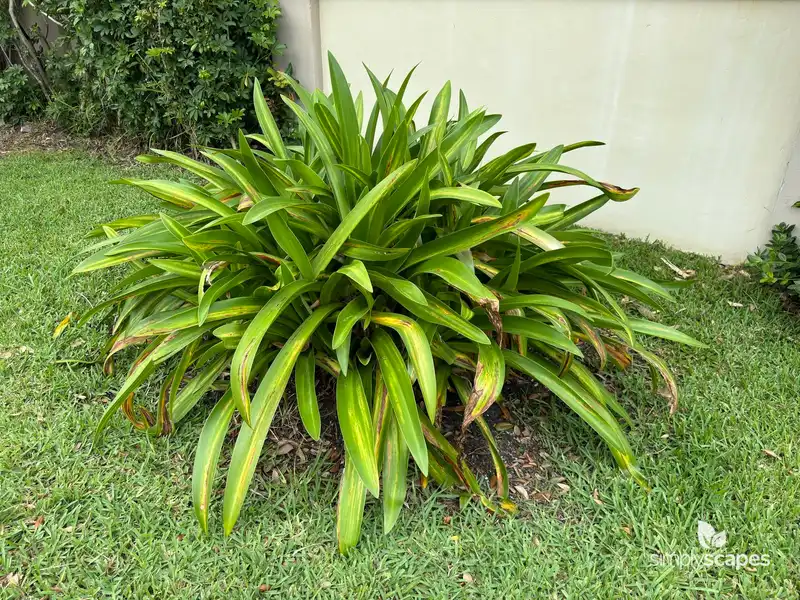
Beach spider lily
Hymenocallis littoralis
Exotic spider-like blooms with a sweet vanilla scent.
- Plant Type
- Perennials & Annuals
- Width
- 24–36 In.
- Height
- 24–36 In.
- USDA hardiness zone
- 9 - 11
- Sun requirements
- Full Sun, Part Shade
- Water requirements
- Keep moist, especially in full sun
- Design image count
- 1
Design images (1)

Bring your vision to life
The design images above are drag-and-drop ready — place this plant on a photo of your own yard and see it before you plant it.
Create design onlineAbout Beach spider lily
The beach spider lily (Hymenocallis littoralis) is a bulbous perennial with strap-like leaves and fragrant white flowers whose narrow, reflexed petals radiate behind a central cup. Its flowers open from mid-summer into late autumn, and the plant suits warm beds, containers, or pond-edge plantings where soil stays moist but drains freely. [Stellenbosch University Botanical Garden](https://sun.gardenexplorer.org/taxon-1868.aspx), [PROSEA](https://prosea.prota4u.org/view.aspx?id=2688), and the [KPU Plant Database](https://plantdatabase.kpu.ca/PlantPrint/hyla) document its identity, bloom, and growing context.
## Form and season
This species grows from a bulb and produces clusters of white, fragrant flowers. PROSEA describes plants up to about 80 cm tall and records the species from seashores and inland moist, sandy sites; the garden database records bloom from mid-summer into late autumn. Its spider-like flower form brings a strong focal point to warm-climate plantings.
## Siting and soil
Use part shade or full sun where moisture can be maintained. A light, sandy or loamy medium with good drainage suits the bulb; KPU notes that full sun works when soil remains moist. It can be grown in a container, and sources also describe aquatic or pond-edge growing.
## Maintenance
Keep the root zone evenly moist while preserving drainage, especially for plants in sunny positions or containers. Allow the foliage to support the bulb through its growing cycle; PROSEA notes that offsets are the usual means of propagation when a clump is divided.