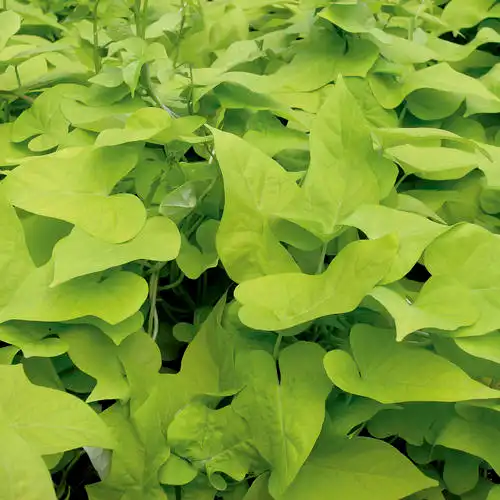
Sweet Potato Vine (Ipomoea)
Ipomoea batatas
A versatile tropical vine prized for its edible tubers and vibrant ornamental foliage.
- Plant Type
- Perennials & Annuals
- Width
- 4-5 Ft.
- Height
- 4-10 In.
- USDA hardiness zone
- 11
- Sun requirements
- Full Sun, Part Shade
- Design image count
- 5
Design images (5)


Bring your vision to life
The design images above are drag-and-drop ready — place this plant on a photo of your own yard and see it before you plant it.
Create design onlineAbout Sweet Potato Vine (Ipomoea)
Sweetpotato (Ipomoea batatas) is a frost-sensitive perennial vine grown as a warm-season annual in many gardens. It is cultivated for edible tuberous roots and for ornamental foliage; ornamental selections vary in leaf shape and color, while vegetable cultivars are selected for roots. The [NC State Extension species profile](https://plants.ces.ncsu.edu/plants/ipomoea-batatas/) covers both uses and the species’ growing requirements.
## Placement and growth
Grow it in full sun or partial shade in loamy, well-drained soil with organic matter. It can spread by runners as a ground cover or trail from containers; train it if you want the stems to climb. NC State notes that ornamental forms are often used in mixed containers and that the species can also be planted in edible, pollinator, water, or rock gardens.
## Water and seasonal care
The species tolerates drought and dry soil, but container moisture can change quickly with heat and exposure. The [NC State profile](https://plants.ces.ncsu.edu/plants/ipomoea-batatas/) describes the plant as frost-sensitive and notes that tuber cuttings can be planted after the last frost. In cold-winter climates, grow it as a seasonal foliage vine and protect edible roots from frost before harvest.
## Maintenance
Keep the soil draining freely and guide runners or trailing stems to suit the space. In containers, check moisture regularly and water when needed; in beds, adjust watering to rainfall, soil, and exposure.