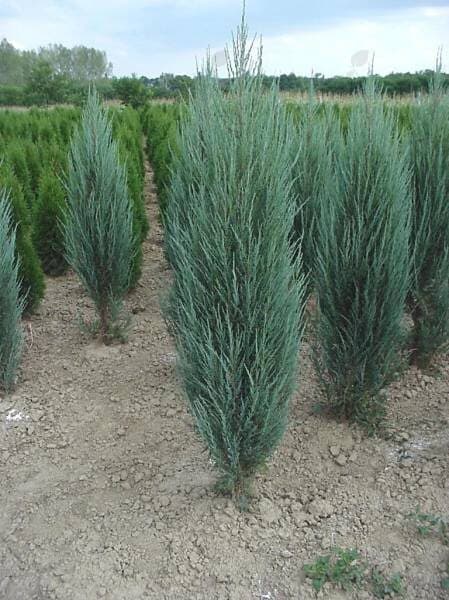
Blue Arrow Juniper Tree
Juniperus scopulorum 'Blue Arrow'
A stunning, narrow blue juniper perfect for vertical accents.
- Plant Type
- Conifer Trees
- Width
- 24 In.
- Height
- 12-15 Ft.
- USDA hardiness zone
- 4 - 9
- Sun requirements
- Full Sun
- Design image count
- 1
Design images (1)

Bring your vision to life
The design images above are drag-and-drop ready — place this plant on a photo of your own yard and see it before you plant it.
Create design onlineAbout Blue Arrow Juniper Tree
Blue Arrow is a narrow, upright selection of Rocky Mountain juniper, Juniperus scopulorum. Its dense branching and bright blue-green evergreen foliage create a tall screen or vertical accent where planting space is limited. The [American Conifer Society cultivar profile](https://conifersociety.org/conifers/juniperus-scopulorum-blue-arrow/) and [Oregon State University profile](https://landscapeplants.oregonstate.edu/plants/juniperus-scopulorum-blue-arrow) give a mature size of about 12–15 feet tall by 2 feet wide. The [Monrovia plant profile](https://www.monrovia.com/blue-arrow-juniper.html) reports USDA zones 4–9 and describes it as an improved form of ‘Skyrocket’ developed at Pine Grove Nurseries in 1949.
## Form and use
This columnar cultivar works as a formal accent, narrow screen, windbreak, or container specimen. Its blue-green foliage is present year-round, and the cultivar is reported to produce silvery-blue, berry-like cones. The species is native to the Rocky Mountain region; the [Nebraska Forest Service](https://nfs.unl.edu/juniper-rocky-mountain/) describes Rocky Mountain juniper as drought tolerant and adaptable to varied soils. Cultivar hardiness information differs among sources, so the zone range here follows the exact Monrovia cultivar profile.
## Maintenance
Plant in full sun and avoid persistently wet, poorly drained soil. During the first growing season, water deeply and regularly while roots establish; Monrovia advises watering when the top 2 inches of soil is dry and reducing frequency after establishment. Feed before spring growth only if needed for the site. Allow the narrow crown to develop without crowding; monitor watering during extended dry periods, especially for plants in containers.