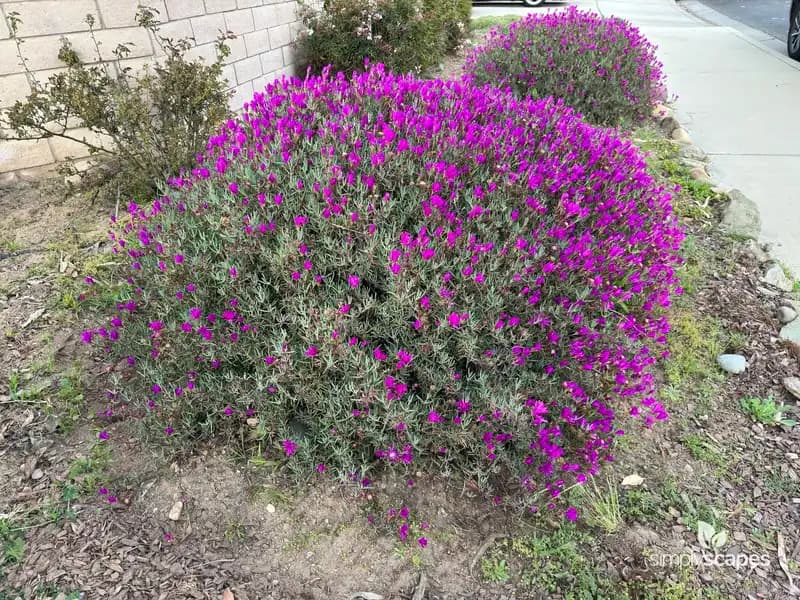
Trailing Ice Plant
Lampranthus spectabilis
A vibrant, fast-growing succulent groundcover with dazzling spring blooms.
- Plant Type
- Succulents
- Width
- 24-36 In.
- Height
- 6-12 In.
- USDA hardiness zone
- 9 - 11
- Sun requirements
- Full Sun
- Design image count
- 2
Design images (2)


Bring your vision to life
The design images above are drag-and-drop ready — place this plant on a photo of your own yard and see it before you plant it.
Create design onlineAbout Trailing Ice Plant
Trailing ice plant is a South African succulent with a spreading mat of fleshy gray-green leaves and bright pink, daisy-like flowers. It suits warm, sunny sites with sharply drained soil, including rockeries, slopes, groundcover plantings, and containers. Flowering shifts with climate: Auckland Botanic Gardens records late winter to early spring, while the RHS notes summer flowering for Lampranthus in the UK.
## Form and flowering
This evergreen, tender succulent grows about 20 cm tall and can spread roughly 70 cm in the Auckland Botanic Gardens profile. Its low, sprawling stems and dense foliage make a useful carpet among stones or over a slope. Pink flowers contrast with the gray-green leaves; blooms attract bees. Kew records the species as native to South Africa’s Cape Provinces.
## Site and placement
Give it full sun and a free-draining, preferably sandy or gritty soil. It is suited to coastal sites and the Auckland profile reports tolerance of salt spray. This tender species is best for frost-free or mild-winter gardens; in colder areas, grow it in a container that can be moved to shelter. Its warm-climate flowering calendar may differ from the listed regional examples.
## Maintenance
Water moderately while it is actively growing and sparingly when dormant. In a pot, let the mix dry between waterings and prevent water from collecting around the roots. Trim sprawling stems to keep them within their allotted space. Propagate by taking cuttings and rooting them in free-draining compost.
## Cape Town veldfire guidance
[Cape Town’s veldfire planning guidelines](https://resource.capetown.gov.za/documentcentre/Documents/Procedures%2C%20guidelines%20and%20regulations/Ukuvuka%20Veldfire%20Related%20Planning%20Guidelines%202004-04-29.pdf) list this plant’s genus among potential low-level barriers. The source does not identify this species individually; verify local suitability and follow its placement and maintenance guidance.
## Cape Town — 2004 barrier table scope and maintenance
The [Cape Town veldfire planning guidelines](https://resource.capetown.gov.za/documentcentre/Documents/Procedures%2C%20guidelines%20and%20regulations/Ukuvuka%20Veldfire%20Related%20Planning%20Guidelines%202004-04-29.pdf), Annexure 1, section 3.3, include the following source entry or entries: Table 4 (Groundcovers): “Lampranthus spp” / Vygie. A species or named hybrid is a qualified representative of the printed genus group, not an individual assessment or a designation of every member. The city's PDF timed out during this audit; these table cells and adjacent conditions were checked in the [indexed copy of the same April 2004 document](https://www.scribd.com/document/790764685/Ukuvuka-Veldfire-Related-Planning-Guidelines-2004-04-29). This records that historical source's guidance; check current local requirements and suitability before use.
General source conditions: use broad-leaved, moisture-rich plants as potential screens at the fireward property edge; maintain an easy-to-walk-through garden and leaf litter no more than 15 mm deep. Avoid flammable plants under decks, against walls/wooden pillars or in hanging baskets. Remove accumulated garden refuse and dead material. No source listing guarantees survival or prevents all burning.
Groundcover barriers are intended to remain low and reduce the passage of flames through the garden. Succulent leaf moisture helps, but persistent dead aloe leaves must be removed. Remove dry seasonal stems, especially on annual species; keep adjacent lawn short and avoid a continuous grass route from the boundary to the house. The broad “other prostrate ground covers” row remains unassigned and does not designate all groundcovers.