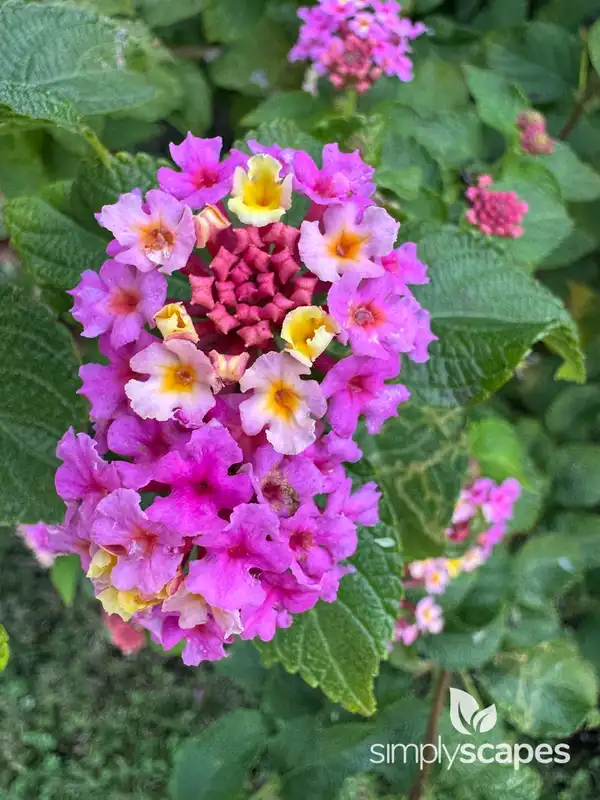
Lantana
Lantana camara
Vibrant, heat-loving blooms that attract butterflies all summer long.
- Plant Type
- Shrubs & Roses
- Width
- 3-6 Ft.
- Height
- 1-5 Ft.
- USDA hardiness zone
- 7 - 11
- Sun requirements
- Full Sun
- Design image count
- 2
Design images (2)


Bring your vision to life
The design images above are drag-and-drop ready — place this plant on a photo of your own yard and see it before you plant it.
Create design onlineAbout Lantana
Lantana camara is a warm-climate flowering shrub grown for rounded clusters that may combine yellow, orange, pink, red or white tones. Plant size and habit vary widely among selections and climates, so use cultivar-specific dimensions when choosing a named form.
## Garden Use
Use this species in sunny borders, containers or warm-climate pollinator plantings. It flowers over a long warm season and attracts butterflies. In frost-prone regions, it is commonly treated as a seasonal plant; where it is perennial, its mature size can be much larger than a compact bedding cultivar. Its berries and foliage can be toxic if eaten.
## Growing Conditions
Choose full sun and soil that drains freely. Water during establishment and extended dry spells, then avoid persistently wet soil. Lantana tolerates heat and periods of drought once established. In Florida and other warm regions where L. camara can spread beyond gardens, check local invasive-plant guidance and prevent unwanted seedling growth. UF/IFAS also cautions that lantana is poisonous to livestock.
For a broad species profile, see [NC State Extension](https://plants.ces.ncsu.edu/plants/lantana-camara/) and [UF/IFAS](https://ask.ifas.ufl.edu/publication/EP648). Their size and behavior descriptions refer to the species, not every compact named cultivar.
## Maintenance
Keep young plants watered as roots establish. In containers, check moisture frequently during hot weather. Remove unwanted seedlings where lantana is invasive locally, and wear gloves if handling foliage irritates your skin.