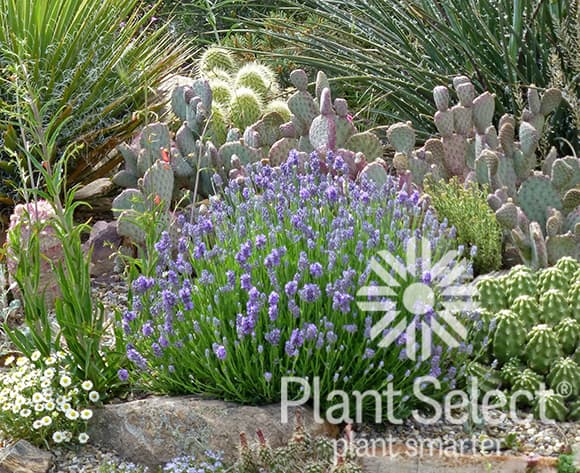
Wee One Lavender
Lavandula angustifolia 'Wee One'
A perfectly petite, xeric dwarf lavender for small spaces and rock gardens.
- Plant Type
- Perennials & Annuals
- Width
- 12-16 In.
- Height
- 8-10 In.
- USDA hardiness zone
- 5 - 10
- Sun requirements
- Full Sun
- Plant developer
- Plant Select
- Design image count
- 2
Design images (2)


Bring your vision to life
The design images above are drag-and-drop ready — place this plant on a photo of your own yard and see it before you plant it.
Create design onlineAbout Wee One Lavender
Wee One is a compact, slow-growing English lavender with a late-spring display of lavender-blue flowers and dark blue calyxes. Its tight evergreen mound stays about 8–10 inches tall and 12–15 inches wide, bringing fragrance and pollinator activity to small garden spaces.
## Garden use
This dwarf selection fits a sunny border edge, rock garden, or container where its flower heads can be enjoyed up close. Plant Select lists it for USDA zones 5–10 and describes it as very low-water once established, with good heat tolerance. The [official Plant Select plant profile](https://plantselect.org/plant/lavandula-angustifolia-wee-one/) gives cultivar-specific size, bloom, and growing details. The [UC Davis Arboretum listing](https://www.arboretum.ucdavis.edu/sites/g/files/dgvnsk1546/files/inline-files/F18_3_Clearance_Nov_3.pdf) notes its evergreen habit, fragrant late-spring flowers, and appeal to bees and butterflies.
## Growing conditions
Give Wee One full sun and sharply draining soil; avoid locations that stay wet in winter. Water new plants regularly through their first growing season, then reduce irrigation in the ground as roots establish. Containers dry faster and need closer summer monitoring. Lavender performs best without rich, constantly moist soil; good drainage is especially important in heavier ground.
## Maintenance
Trim lightly after flowering to keep the mound compact, removing spent stalks and only a little leafy growth. In spring, tidy dead or frost-damaged stems. Avoid cutting into bare woody growth, which may not resprout.