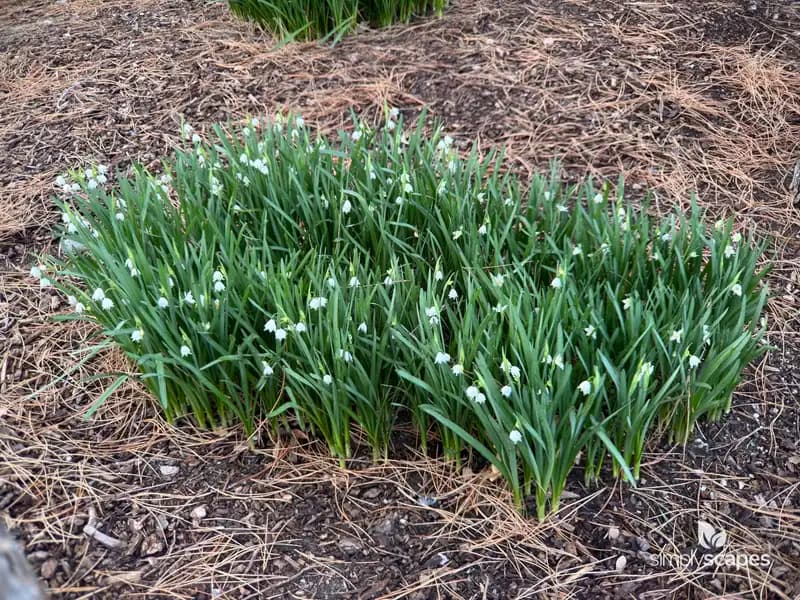
Summer Snowflake
Leucojum aestivum
Elegant, bell-shaped white blooms for damp spring gardens.
- Plant Type
- Perennials & Annuals
- Width
- 9-12 In.
- Height
- 12-24 In.
- USDA hardiness zone
- 4 - 8
- Sun requirements
- Full Sun, Part Shade
- Design image count
- 2
Design images (2)


Bring your vision to life
The design images above are drag-and-drop ready — place this plant on a photo of your own yard and see it before you plant it.
Create design onlineAbout Summer Snowflake
Summer snowflake is a spring-flowering bulb, despite its common name. Its upright clump of narrow green leaves sends up leafless stems bearing nodding white bells marked with green at the tips. It is a good choice for a damp border or woodland edge where spring flowers can naturalize over time. [NC State Extension’s species profile](https://plants.ces.ncsu.edu/plants/leucojum-aestivum/common-name/snowflake/) describes its seasonal behavior and cultivation; the [RHS profile](https://www.rhs.org.uk/plants/10003/leucojum-aestivum/details) records the species’ bulbous habit and spring flowers.
## Appearance and placement
Mature clumps are about 1–2 feet tall and 9–12 inches wide. The flowers usually appear in mid-spring, before summer dormancy, and have six similar-sized tepals with green marks. Plant bulbs in groups beneath deciduous trees, in a moist perennial border, or along a pond margin. It tolerates full sun to partial shade and can grow in clay as well as loam when the site stays damp during active growth.
## Growth and seasonal context
Allow foliage to remain after flowering so the bulbs can replenish before dying back. Summer snowflake can spread and naturalize; give it room and avoid disturbing established bulbs. NC State Extension identifies it as invasive in Delaware, so check local guidance before planting where it may escape into natural areas. The species is native from Europe into northern Iran, according to [Kew’s Plants of the World Online](https://powo.science.kew.org/taxon/urn:lsid:ipni.org:names:65743-1).
## Maintenance
Plant bulbs in autumn, about 2–4 inches deep and roughly 6 inches apart. Keep soil consistently moist through active growth, but let the dormant summer bulbs experience drier conditions. Avoid acidic soil and do not move established bulbs unnecessarily. Divide only when a clump needs thinning, and handle bulbs as ornamental rather than edible plants.