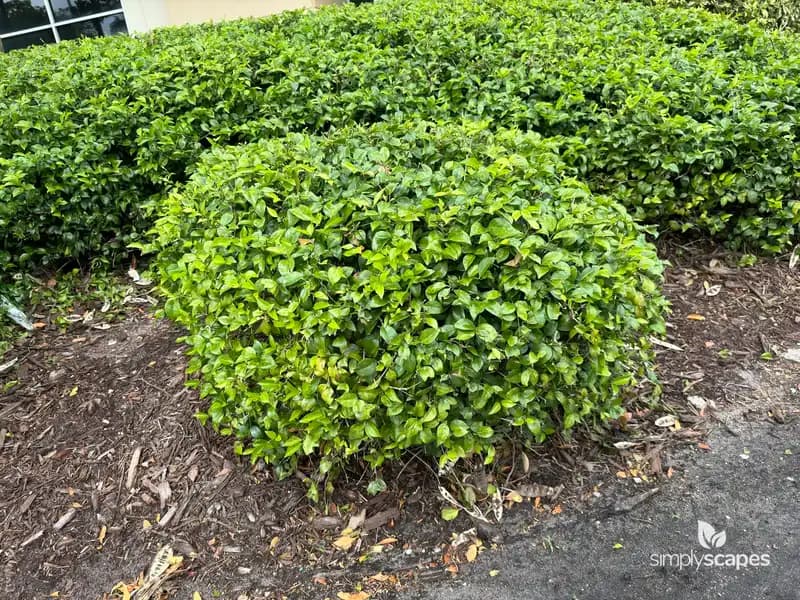
Japanese Privet
Ligustrum japonicum
Upright evergreen shrub or small tree with glossy foliage, fragrant pale flowers, and black berries.
- Plant Type
- Shrubs & Roses
- Width
- 6-8 Ft.
- Height
- 6-12 Ft.
- USDA hardiness zone
- 7 - 10
- Sun requirements
- Full Sun, Part Shade
Bring your vision to life
The design images above are drag-and-drop ready — place this plant on a photo of your own yard and see it before you plant it.
Create design onlineAbout Japanese Privet
Japanese privet (Ligustrum japonicum) is an evergreen shrub or small tree with glossy, dark green leaves and clusters of small, off-white flowers. Its dense upright form can be grown as a screen or hedge, though flowering and mature size vary with climate and pruning. [Kew recognizes the species](https://powo.science.kew.org/taxon/urn:lsid:ipni.org:names:610001-1/general-information); [RHS profile](https://www.rhs.org.uk/plants/77548/ligustrum-japonicum/details); [North Carolina Extension profile](https://plants.ces.ncsu.edu/plants/ligustrum-japonicum/common-name/japanese-privet/).
## Form and flowering
The waxy leaves can reach about 10 cm long. RHS gives a broad mature range of roughly 2.5–4 m tall and wide, while North Carolina Extension describes plants commonly 1.8–3.7 m tall and 1.5–1.8 m wide; clipped hedges remain smaller. Fragrant flower sprays appear from late spring into summer, sometimes continuing into early autumn, and develop into small black berries. The flowers attract insects and the fruit is used by birds, but the berries are not for people or pets to eat.
## Site and planting
Plant in full sun or partial shade in well-drained chalk, clay, loam, or sandy soil. Water regularly while establishing; established plants tolerate some drought and salt spray. Allow room for an untrimmed shrub, or use spacing and pruning to shape a hedge or screen. North Carolina Extension lists this species as invasive in North Carolina, so check local invasive-plant guidance before planting elsewhere.
## Maintenance
Prune after flowering if you want to retain next year's blooms; repeated clipping can reduce flowering and fruit. Remove unwanted seedlings where the plant has naturalized.