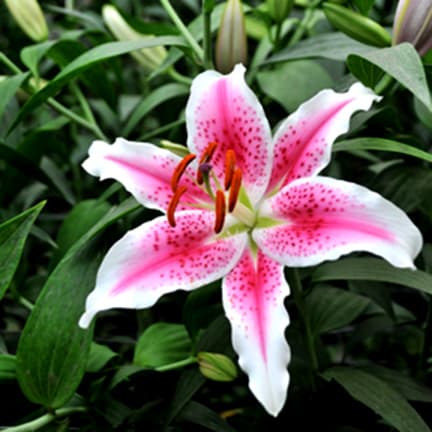
Lily
Lilium
Bulb-forming perennials with upright stems and flowers that vary widely in shape, color, and scent.
- Plant Type
- Perennials & Annuals
- Width
- 8-12 In.
- Height
- 12-24 In.
- USDA hardiness zone
- 3 - 9
- Sun requirements
- Full Sun
- Design image count
- 6
Design images (6)


Bring your vision to life
The design images above are drag-and-drop ready — place this plant on a photo of your own yard and see it before you plant it.
Create design onlineAbout Lily
True lilies (Lilium) are bulbous perennials with upright leafy stems and showy flowers. Across this diverse genus, blooms vary in shape, size, color and scent, and plants range from compact container forms to tall stems that may need staking. Most grow best in sun with cool roots and moist, well-drained soil, although shade and soil preferences differ among species and hybrid groups. [The RHS genus guide](https://www.rhs.org.uk/plants/lilies) and [growing guide](https://www.rhs.org.uk/plants/lilies/how-to-grow-lilies) describe this range.
## Garden Use
Use lilies in borders, containers or as cut flowers. Depending on the selection, blooms may be trumpet-, bowl-, funnel- or Turk’s-cap shaped, in colors from white and pastels to bold shades and bicolors. Many flower in summer, but size and timing vary; check the particular bulb or cultivar before planting. The [North Carolina Extension Plant Toolbox](https://plants.ces.ncsu.edu/plants/lilium/) also summarizes the distinct horticultural groups and their differing habits.
## Growing Conditions
Plant bulbs in autumn or spring in sun or partial shade, with the roots shaded where practical. Choose moist, fertile soil that drains well; waterlogged ground can rot bulbs. Soil preferences vary: some groups favor acidic conditions, others tolerate or prefer alkaline soil. Tall stems in exposed sites may need support.
## Maintenance
Keep the soil from drying completely, but avoid waterlogging. Remove faded flowers if seed production is not wanted, and cut stems down after they yellow at the end of the season. All parts of lilies are poisonous to cats; bulbs can also pose a risk to other pets, so plant and store them accordingly.