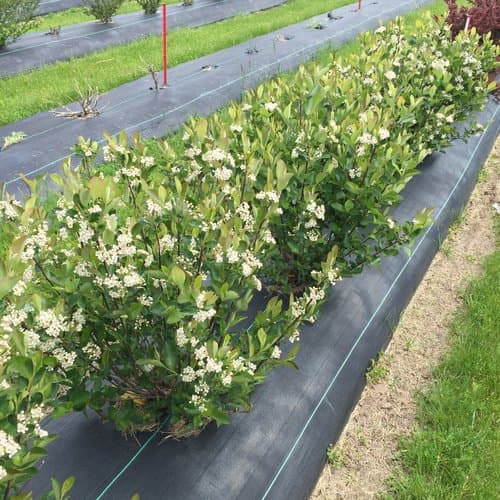
Low Scape Hedger® Aronia
Aronia melanocarpa 'UCONNAM166'
A narrow, non-suckering black chokeberry with white spring flowers, green foliage, and red-orange fall color.
- Plant Type
- Shrubs & Roses
- Width
- 2-3 Ft.
- Height
- 3-5 Ft.
- USDA hardiness zone
- 3 - 9
- Sun requirements
- Full Sun, Part Shade
- Water requirements
- Moderate
- Plant developer
- Proven Winners
- Design image count
- 1
Design images (1)

Bring your vision to life
The design images above are drag-and-drop ready — place this plant on a photo of your own yard and see it before you plant it.
Create design onlineAbout Low Scape Hedger® Aronia
Low Scape Hedger® is the UCONNAM166 selection of black chokeberry (*Aronia melanocarpa*), bred for an upright, narrow form, white spring flowers, and bright red-to-orange autumn foliage. It grows about 3–5 feet tall and 2–3 feet wide, making it useful where a hedge or screen needs a compact footprint.
## Garden role and site
Plant it in groups for a low informal screen, or use it as a flowering shrub in a mixed border. The breeder describes it as non-suckering and adaptable to full sun or part shade and to wet or dry soils. Its white flowers open in mid-spring, followed by little or no fruit; the foliage supplies the stronger autumn color. The [Proven Winners profile](https://www.provenwinners.com/plants/aronia/low-scape-hedger-aronia-melanocarpa) gives USDA zones 3–9 and notes that the shrub can be left natural or pruned into a formal hedge.
The cultivar was selected at the University of Connecticut and is identified by the denomination UCONNAM166. The [Canadian Food Inspection Agency record](https://active.inspection.gc.ca/english/plaveg/pbrpov/cropreport/bchok/app00010425e.shtml) describes its upright habit and compares it with the Viking selection. The United States patent document records the name and distinct cultivar traits; patent number and date are included in the structured fields, without an assertion about current legal status.
## Establishment and pruning
Choose a site with enough width for the eventual 2–3 foot spread. Water regularly while roots establish, then adjust to rainfall and local soil drainage. Pruning is optional for a natural form; for a shaped hedge, prune shortly after flowering so new growth can mature before winter.
## Maintenance
Remove dead or damaged branches as needed. If maintaining a formal outline, trim after spring bloom; avoid routine shearing later in the season, when next year’s flower buds are forming.