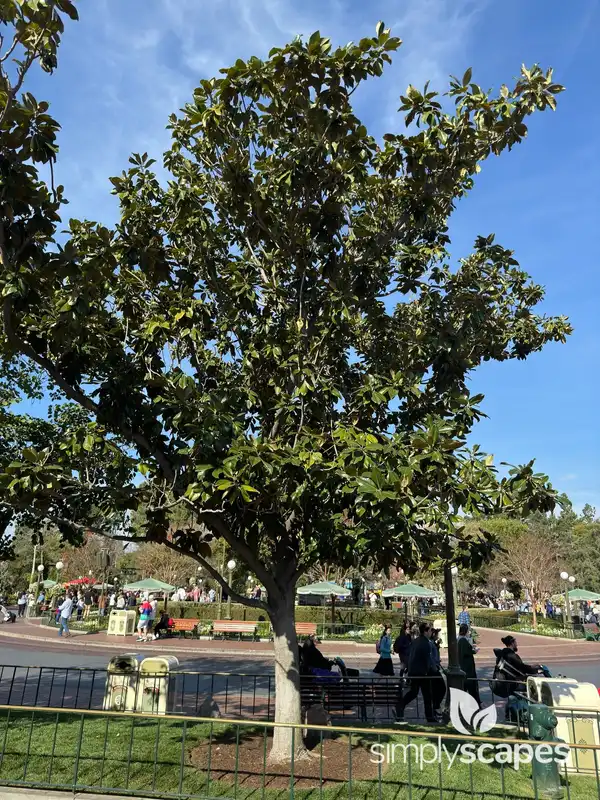
Southern Magnolia
Magnolia grandiflora
An iconic evergreen with massive, fragrant white blooms and glossy, rust-backed leaves.
- Plant Type
- Flowering Trees
- Width
- 30–50 ft.
- Height
- 60–80 ft.
- USDA hardiness zone
- 7 - 9
- Sun requirements
- Full Sun, Part Shade
- Design image count
- 12
Design images (12)


Bring your vision to life
The design images above are drag-and-drop ready — place this plant on a photo of your own yard and see it before you plant it.
Create design onlineAbout Southern Magnolia
Southern magnolia is a broadleaf evergreen native to the southeastern United States. It forms a pyramidal to rounded crown with glossy dark-green leaves and fragrant white flowers, and mature trees are commonly listed at 60–80 feet tall and 30–50 feet wide.
## Placement
Use this large tree as a specimen or accent where its mature canopy can expand; it can also form an evergreen screen. Allow generous clearance from buildings, paths, and overhead lines.
## Growing conditions
Plant in moist, organically rich, well-drained soil in full sun or part shade. Part shade can help in hot locations. It dislikes soils that stay very dry or waterlogged; hardiness is strongest in Zones 7–9, with Zone 6 possible in a protected site.
## Maintenance
Water during establishment and extended dry spells, and avoid sites with poor drainage. The Missouri Botanical Garden reports no serious insect or disease problems. [Missouri Botanical Garden Plant Finder](https://www.missouribotanicalgarden.org/PlantFinder/PlantFinderDetails.aspx?=&taxonid=282515) · [Cornell Woody Plants Database](https://woodyplants.cals.cornell.edu/plant/355).