Sweetbay Magnolia Tree
Magnolia 'virginiana'
An elegant, lemon-scented native tree perfect for rain gardens and wet soils.
- Plant Type
- Flowering Trees
- Width
- 20–25 Ft.
- Height
- 30–50 Ft.
- USDA hardiness zone
- 5 - 10
- Sun requirements
- Full Sun, Part Shade
- Design image count
- 1
Design images (1)

Bring your vision to life
The design images above are drag-and-drop ready — place this plant on a photo of your own yard and see it before you plant it.
Create design onlineAbout Sweetbay Magnolia Tree
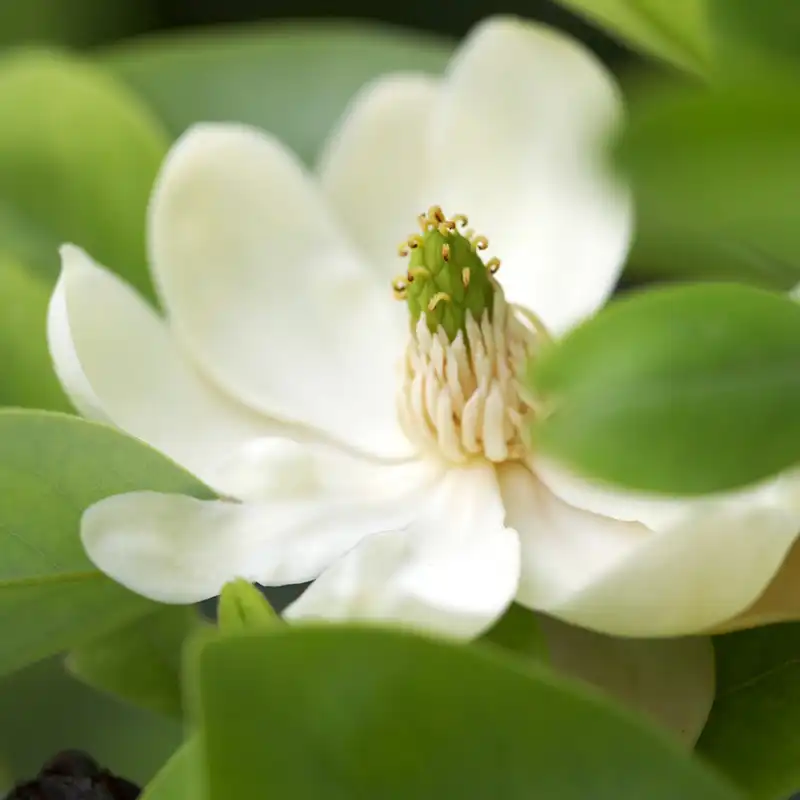
Sweetbay magnolia (Magnolia virginiana) is an eastern North American shrub or tree with glossy green leaves and pale, silvery undersides. Its fragrant, creamy-white flowers appear from spring into summer, followed by cone-like fruit that opens to show bright red seeds.
## Landscape character
The [Kew Plants of the World Online record](https://powo.science.kew.org/taxon/30016308-2) recognizes Magnolia virginiana as an accepted species native from the eastern United States to Texas and Cuba. Depending on climate, it grows as a deciduous or semi-evergreen multi-stemmed shrub or tree. [North Carolina State Extension](https://plants.ces.ncsu.edu/plants/magnolia-virginiana/) describes a typical height of 10–35 feet, while the [University of North Florida Botanical Garden](https://www.unf.edu/botanical-garden/plants/magnolia-virginiana.html) describes a medium tree around 40 feet tall. Individuals in the Deep South can grow substantially taller. Its cup-shaped flowers are fragrant, and the red seeds attract fruit-eating birds.
## Site
Plant in full sun to partial shade. Sweetbay magnolia is adapted to consistently moist, acidic, organic-rich soils and can grow in boggy or swampy ground, making it useful near ponds and in rain gardens. It also grows in ordinary garden soil if moisture is reliable and drainage is adequate. Allow for a broad crown or multi-stemmed shrub form; it can serve as a specimen or tall screen.
## Maintenance
Water during establishment and extended dry periods, especially in drier sites. Mulch the root area to conserve moisture, keeping mulch clear of the trunk. Avoid chronic standing water around the root flare; the species tolerates wet soils but not prolonged flooding. Prune only to remove damaged branches or manage the form, preferably after flowering.