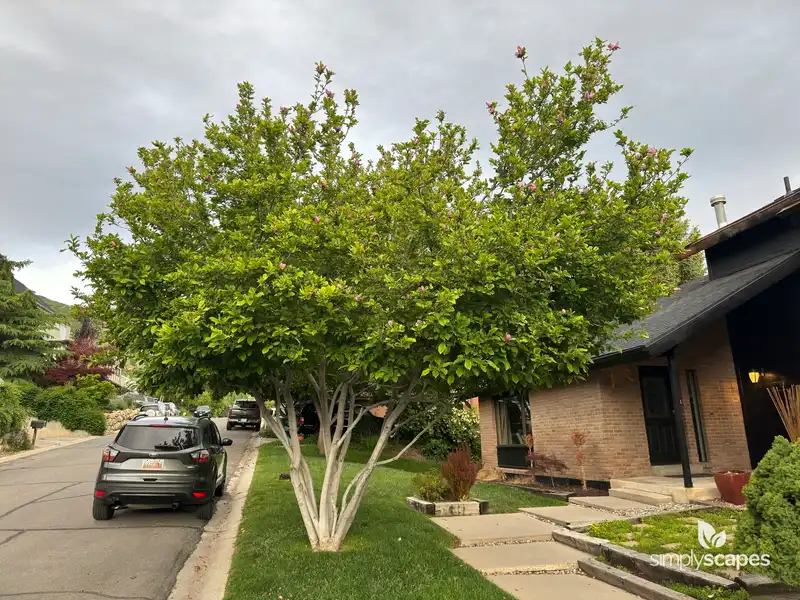
Saucer Magnolia Tree
Magnolia x soulangeana
A breathtaking spring icon with massive, goblet-shaped pink and white blooms.
- Plant Type
- Flowering Trees
- Width
- 20-25 Ft.
- Height
- 20-25 Ft.
- USDA hardiness zone
- 4 - 9
- Sun requirements
- Full Sun, Part Shade
- Design image count
- 17
Design images (17)


Bring your vision to life
The design images above are drag-and-drop ready — place this plant on a photo of your own yard and see it before you plant it.
Create design onlineAbout Saucer Magnolia Tree
Saucer magnolia is a deciduous hybrid tree grown for large, goblet-shaped flowers that open on bare branches in spring. Pink, purple, and white forms occur across this varied hybrid, and the broad crown becomes an attractive shade tree after flowering. [The Morton Arboretum’s species profile](https://mortonarb.org/plant-and-protect/trees-and-plants/saucer-magnolia/) gives a typical mature size of 20–30 feet tall and wide, while its cultivar notes show meaningful variation in form and dimensions.
## Placement
Grow in full sun or partial shade in moist, well-drained, acidic soil. Published mature-size estimates for the species are about 20–30 feet in both height and spread, though named cultivars vary in size and form. This profile covers the hybrid species rather than any one named cultivar. The species is listed for USDA zones 4–9.
## Spring display
Flowers emerge before leaves, often in early to mid-spring. Their early timing gives the tree its showy bare-branch display but also leaves flowers exposed to late frost. The foliage is large and leathery, turns yellow in fall, and the smooth gray bark adds winter structure. Flowers are fragrant, with colors varying among cultivars.
## Maintenance
Water regularly during establishment and in dry weather; the species is moderately sensitive to drought. Protect the early flowers from frost where practical, and avoid pruning unless needed for structure or damaged wood. Fallen petals and fruiting parts can be messy near paving.