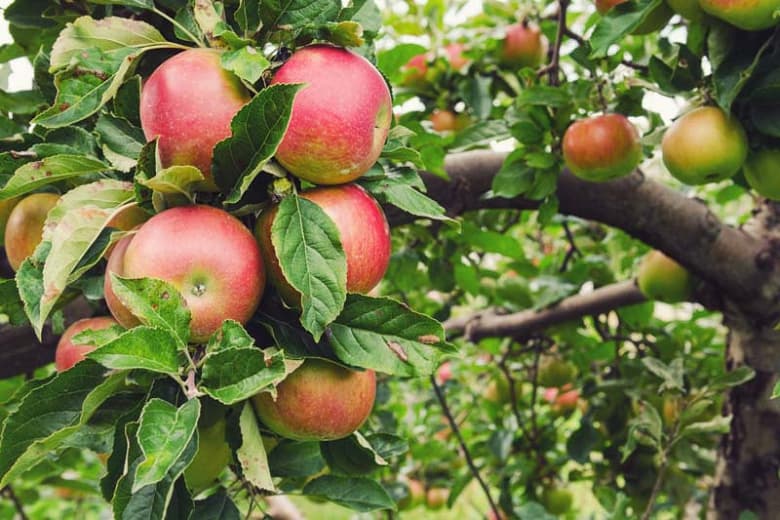
Honeycrisp Semi-Dwarf Apple Fruit Tree
Malus domestica 'Honeycrisp'
Exceptional crunch and honey-sweet flavor in a cold-hardy tree.
- Plant Type
- Edible Plants
- Width
- 20 Ft.
- Height
- 20 Ft.
- USDA hardiness zone
- 4 - 7
- Sun requirements
- Full Sun
- Water requirements
- Moderate
Bring your vision to life
The design images above are drag-and-drop ready — place this plant on a photo of your own yard and see it before you plant it.
Create design onlineAbout Honeycrisp Semi-Dwarf Apple Fruit Tree
Honeycrisp is the University of Minnesota’s crisp, juicy, sweet-tart apple, introduced in 1990. Medium-to-large fruit has a dappled red blush over yellow, with color developing less reliably in warm conditions; the semi-dwarf label describes a form, while rootstock determines actual tree size.
## Fruit and harvest
Minnesota Hardy lists a Minnesota harvest window of about September 20 to October 5, roughly a week after McIntosh. The fruit is excellent fresh and also suits cooking and salads. Harvest maturity varies by site; in warm climates, fruit may color less and can be mild if picked early. The cultivar stores well, though bitter pit and soft scald can affect fruit.
## Tree and site
The University reports USDA Zone 4 hardiness, low-to-moderate vigor, and a somewhat spreading habit. Young trees can bear early, so central-leader training may require staking or fruit removal. A co-blooming pollinizer can help production; check local guidance for compatible cultivars and bloom timing.
Sources: [Minnesota Hardy’s Honeycrisp page](https://mnhardy.umn.edu/honeycrisp), [University of Maryland Extension](https://extension.umd.edu/resource/important-apple-cultivars-mid-atlantic-region-eb-2023-0684), [NC State Extension apple profile](https://plants.ces.ncsu.edu/plants/malus-domestica/).
## Maintenance
Plant in full sun with good air movement. Prune during dormancy to maintain the leader and canopy, and thin early crops when needed to balance growth. For storage, follow Minnesota Hardy’s specific temperature guidance because Honeycrisp is sensitive to cold-storage disorders.