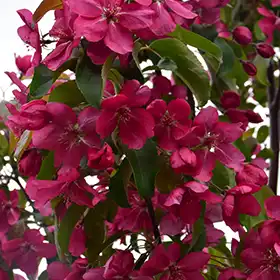
Red Barron Crabapple
Malus 'Red Barron'
A narrow, columnar flowering crabapple with reddish-pink spring bloom and persistent dark-red fruit.
- Plant Type
- Flowering Trees
- Width
- 6-8 Ft.
- Height
- 15-20 Ft.
- USDA hardiness zone
- 4 - 7
- Sun requirements
- Full Sun
- Design image count
- 1
Design images (1)

Bring your vision to life
The design images above are drag-and-drop ready — place this plant on a photo of your own yard and see it before you plant it.
Create design onlineAbout Red Barron Crabapple
Red Barron is a narrow, columnar flowering crabapple selected at Arnold Arboretum and introduced by Simpson Nursery by 1984. Dark red buds open to reddish-pink flowers in spring, followed by glossy dark-red fruit that can persist into winter.
## Form and seasonal display
The [J. Frank Schmidt plant profile](https://jfschmidt.com/all-trees/trees/red-barron-crabapple/) describes an 18-foot tree with an 8-foot spread. Its foliage emerges purple and matures to bronze-green; the cultivar has a distinctly upright, narrow crown. The [Colorado State University Extension cultivar guide](https://extension.colostate.edu/resource/flowering-crabapple-trees/) also lists Red Barron at 18 feet tall by 8 feet wide, with early reddish-pink bloom and red fruit that may persist through winter. The [Trees and Shrubs Online cultivar account](https://www.treesandshrubsonline.org/articles/malus/malus-cultivars-r/) records the Arnold Arboretum selection and Simpson Nursery introduction, and distinguishes this crabapple from the orchard apple ‘Red Baron’.
## Planting
Choose a sunny site where the narrow crown has room to develop. Its columnar form can fit a tighter space than a broad-spreading crabapple, while spring flowers and persistent fruit provide seasonal interest. The [Chicago Botanic Garden profile](https://www.chicagobotanic.org/plant-information/plant-finder/malus-red-barron-red-barron-crabapple) gives a hardiness range of Zones 4–7 and also notes the upright habit and pink flowers.
## Maintenance
Prune selectively in late winter or after flowering to remove crossing branches and upright water sprouts while preserving the natural columnar shape. Remove basal suckers as they appear. J. Frank Schmidt rates scab resistance as fair and reports good resistance to fire blight, cedar-apple rust, and powdery mildew; inspect foliage during the season and clear fallen leaves where disease has been present.