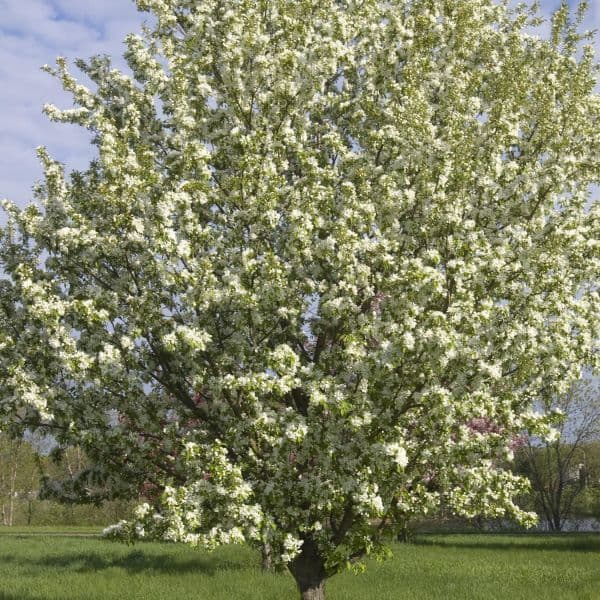
Spring Snow Flowering Crabapple Tree
Malus 'Spring Snow'
A fruitless, fragrant white-flowering crabapple perfect for tidy urban landscapes.
- Plant Type
- Flowering Trees
- Width
- 20 Ft.
- Height
- 25 Ft.
- USDA hardiness zone
- 4 - 8
- Sun requirements
- Full Sun
- Design image count
- 5
Design images (5)


Bring your vision to life
The design images above are drag-and-drop ready — place this plant on a photo of your own yard and see it before you plant it.
Create design onlineAbout Spring Snow Flowering Crabapple Tree
Spring Snow is an upright, broad-oval crabapple whose fragrant, pure-white flowers cover the branches in mid-spring. It is nearly fruitless, making it useful where fallen fruit would be a nuisance; its glossy green leaves turn yellow in fall.
## Landscape use
Use it as a specimen tree in a city or cottage garden, or along a walk where its white bloom can be seen up close. Published size estimates range around 20–25 feet tall and 15–20 feet wide, so allow generous room for the canopy.
## Growing conditions
Plant in full sun and well-drained soil. The Chicago Botanic Garden lists USDA zones 4–8, and the cultivar is described as drought tolerant once established. Morton Arboretum reports fair resistance to apple scab and fire blight, so allow good air circulation and consider local disease pressure. Sources: [Chicago Botanic Garden profile](https://www.chicagobotanic.org/plant-information/plant-finder/malus-spring-snow-spring-snow-crabapple), [Morton Arboretum crabapple cultivar table](https://mortonarb.org/plant-and-protect/trees-and-plants/crabapple-cultivars/), [Gardenia cultivar profile](https://www.gardenia.net/plant/malus-spring-snow/1000), and [Colorado State University Extension crabapple guide](https://extension.colostate.edu/resource/flowering-crabapple-trees/).
## Seasonal interest
The flowers open in mid-spring; the glossy foliage stays green through summer before turning yellow in fall. Spring Snow sets little or no fruit compared with fruiting crabapples.
## Maintenance
Prune in late winter or early spring before bloom, or after flowering, to remove damaged, diseased, crossing, or misplaced branches and improve airflow. Finish pruning by June 1, before the next season’s flower buds begin forming.