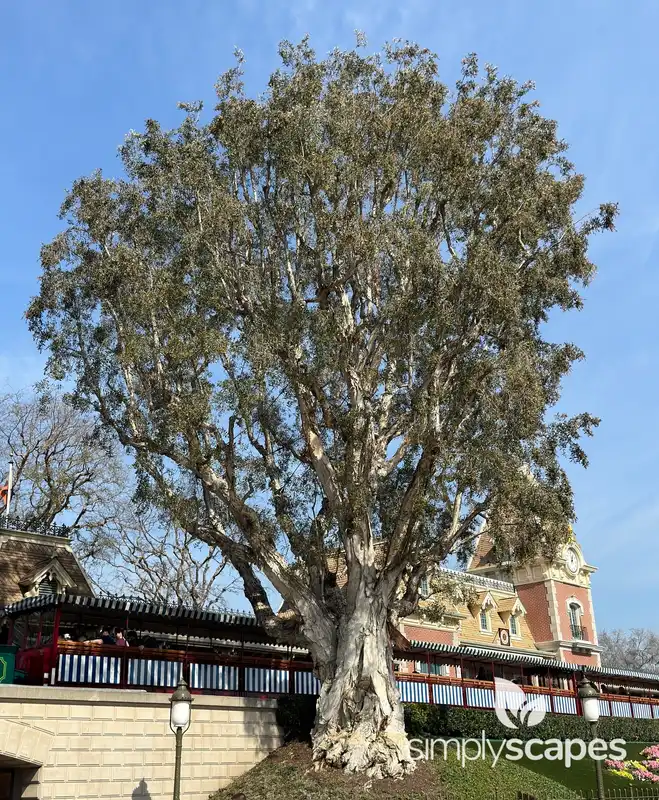
Punk Tree
Melaleuca quinquenervia
A striking white-barked tree perfect for wetlands and coastal landscapes.
- Plant Type
- Shade Trees
- Width
- 15-25 Ft.
- Height
- 40 Ft.
- USDA hardiness zone
- 8 - 11
- Sun requirements
- Full Sun, Part Shade
- Design image count
- 5
Design images (5)


Bring your vision to life
The design images above are drag-and-drop ready — place this plant on a photo of your own yard and see it before you plant it.
Create design onlineAbout Punk Tree
Known as punk tree or broad-leaved paperbark, Melaleuca quinquenervia is an evergreen tree with narrow, five-veined leaves, thick pale peeling bark, and small white flowers packed into bottlebrush-like spikes. Its mature size varies greatly with site, and its ability to colonize disturbed or wet ground makes regional invasive status an important part of choosing it.
## Identification and size
The soft, layered bark and terminal flower spikes are distinctive; woody capsules can persist on the branches. The US Forest Service describes the species as a shrub about 26–33 feet tall on dry, exposed sites, but a 66–98-foot tree in wet lowlands. A 40-foot landscape height and 15–25-foot spread are plausible, though site conditions strongly affect mature size.
## Growing conditions
This species is native to Australia, New Guinea, New Caledonia, and adjacent Indonesia. It can grow in moist and periodically flooded conditions, though Forest Service research reports better growth in moist rather than continuously saturated soil. Climate and local exposure affect how it performs in cultivation; these ecological sources do not establish one garden hardiness range for all regions.
## Regional caution
In South Florida, melaleuca has spread aggressively, producing dense stands that displace native vegetation and alter habitat. UF/IFAS lists it as invasive and on Florida’s noxious-weed lists. Do not plant it where local rules prohibit it, and avoid allowing seed-bearing trees or seedlings to escape cultivation.
## Maintenance
Where it is legally grown, monitor for seedlings and remove unwanted recruits promptly. Check local invasive-plant guidance before disposing of seed-bearing material. Sources: [USDA Forest Service FEIS](https://research.fs.usda.gov/feis/species-reviews/melqui) and [UF/IFAS Center for Aquatic and Invasive Plants](https://plant-directory.ifas.ufl.edu/plant-directory/melaleuca-quinquenervia/).