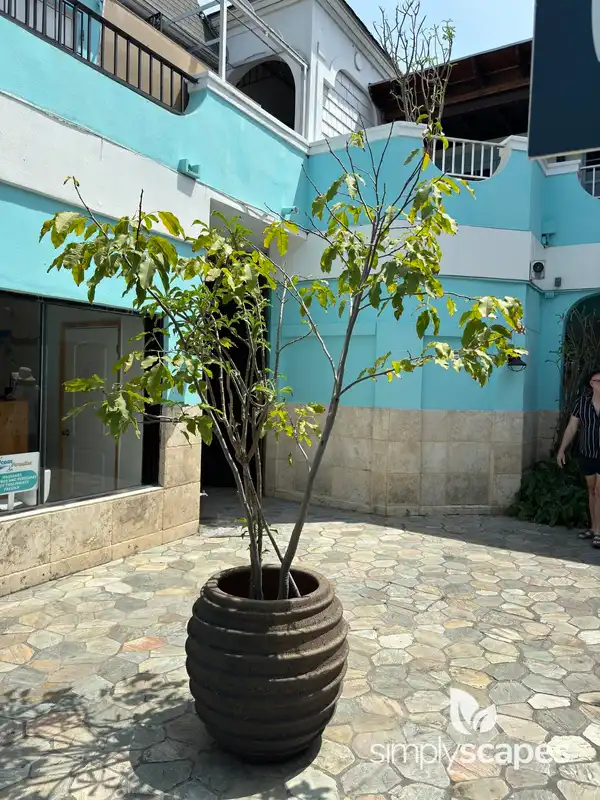
Mamoncillo
Melicoccus bijugatus
An evergreen tropical fruit tree with a rounded crown, fragrant spring flowers, and green fruit with sweet-tart pulp.
- Plant Type
- Flowering Trees
- Width
- 40-80 Ft.
- Height
- 40-80 Ft.
- USDA hardiness zone
- 10 - 11
- Sun requirements
- Full Sun, Part Shade
- Design image count
- 2
Design images (2)


Bring your vision to life
The design images above are drag-and-drop ready — place this plant on a photo of your own yard and see it before you plant it.
Create design onlineAbout Mamoncillo
Mamoncillo (Melicoccus bijugatus), also called Spanish lime, genip, or quenepa, is a large evergreen tropical fruit tree with a rounded, dense crown. Its small, fragrant, greenish-white flowers grow in clusters, and the green drupes carry juicy, sweet-tart pulp around a large seed. In Florida, UF/IFAS reports flowering in April and May and fruit harvest from June through September; timing varies with climate and site.
## Garden Placement
Give this tree full sun, well-drained soil, and ample room for its broad crown and roots. It tolerates prolonged dry periods once established but does not tolerate flooding. The canopy provides shade, while the fruit is eaten fresh; the tree is best suited to warm tropical and subtropical landscapes. See the [University of Florida IFAS guide to mamoncillo](https://ask.ifas.ufl.edu/publication/HS310) for Florida-specific planting and care details.
## Flowers and Fruit
Mamoncillo is usually dioecious, although some trees bear flowers with both sexes. Because pollen may be nonviable on a given tree, good fruiting often requires two functionally opposite trees; flying insects carry pollen between flowers. The fruit is round and green, with a thin leathery skin and a translucent pulp that may be pink, white, or yellowish. It can remain green when ripe, so harvest timing is more useful than a color change alone.
## Maintenance
Water regularly while a young tree establishes, then reduce irrigation as its drought tolerance develops. Keep the root zone well drained and avoid overwatering, which can promote root problems. Mulch the root area while keeping mulch away from the trunk. Prune periodically to keep fruit within reach; UF/IFAS suggests maintaining a manageable tree height of about 12–15 feet for easier care and harvest.