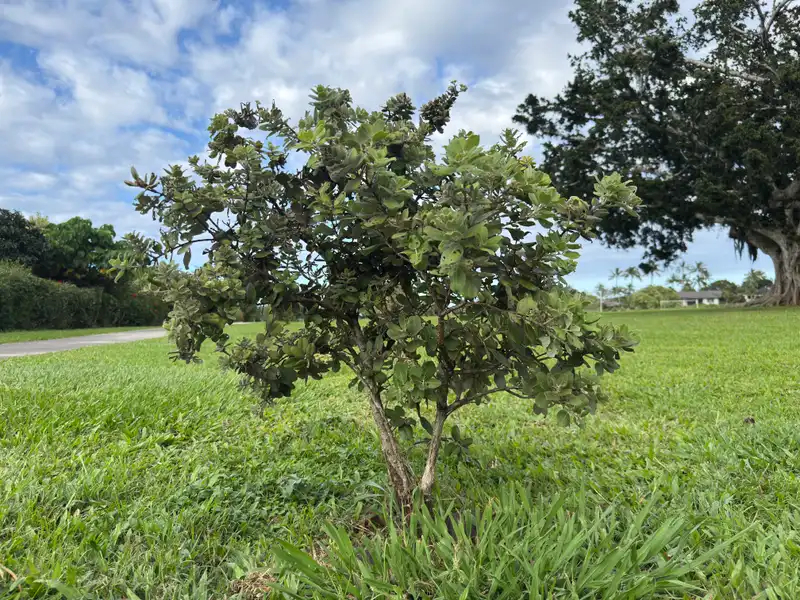
ʻŌhiʻa Lehua (Smooth-leaved)
Metrosideros polymorpha var. glaberrima
A smooth-leaved Hawaiian ʻōhiʻa variety that grows as a shrub or tree and bears brushlike flowers in varied colors.
- Plant Type
- Flowering Trees
- Width
- 10–20 ft
- Height
- 16–33 ft
- USDA hardiness zone
- 10 - 11
- Sun requirements
- Full Sun, Part Shade
- Water requirements
- Medium
- Design image count
- 4
Design images (4)


Bring your vision to life
The design images above are drag-and-drop ready — place this plant on a photo of your own yard and see it before you plant it.
Create design onlineAbout ʻŌhiʻa Lehua (Smooth-leaved)
ʻŌhiʻa Lehua (Smooth-leaved), Metrosideros polymorpha var. glaberrima, is a Hawaiian shrub or tree with smooth, hairless leaves and rough bark that may separate in thin strips. It is endemic to the Hawaiian Islands and occurs as part of the variable ʻōhiʻa-lehua group, whose brushlike flowers range from red to yellow. In Hawaiʻi, ʻōhiʻa grows in both moist and dry forests, and its nectar is an important food source for native birds and insects.
## In the Landscape
This variety can remain shrubby or develop into a tree, so allow room for its crown as it matures. The species is very slow growing and may reach much larger sizes in favorable natural conditions; size depends on the form and site. Flower colors can range from red, orange, yellow, and cream. The smooth leaves distinguish this variety; the Smithsonian’s [Flora of the Hawaiian Islands profile](https://naturalhistory2.si.edu/botany/hawaiianflora/speciesdescr.cfm?epithet1=glaberrima&genus=Metrosideros&rank1=var.&species=polymorpha) describes its accepted botanical variety and native distribution.
## Maintenance
Avoid unnecessary wounds, especially in Hawaiʻi, where Rapid ʻŌhiʻa Death has killed trees on several islands. If work around ʻōhiʻa is needed, clean tools and gear before and after use, and do not move ʻōhiʻa plants, wood, or soil between islands without required permits. Follow current local guidance from the [Hawaiʻi Department of Land and Natural Resources](https://dlnr.hawaii.gov/forestry/plants/ohia-lehua/) and the [University of Hawaiʻi Rapid ʻŌhiʻa Death program](https://rod.ctahr.hawaii.edu/).