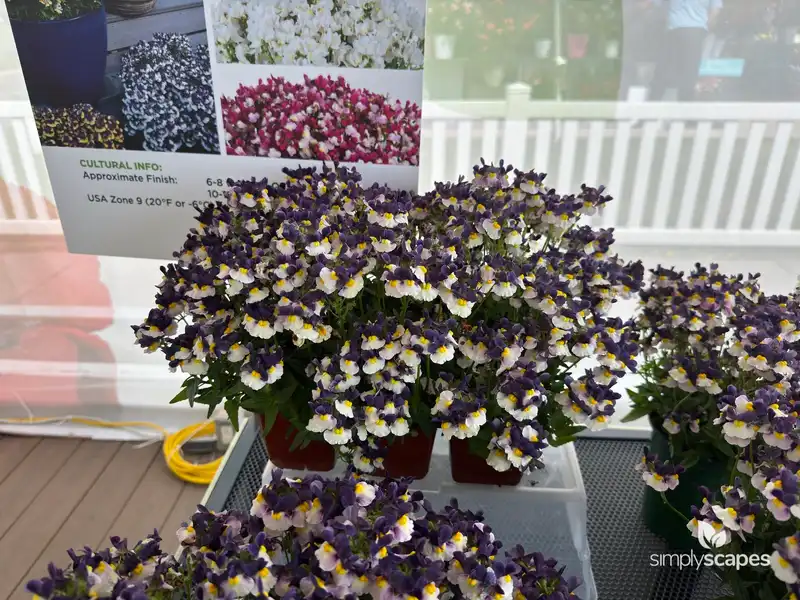
Cape Jewels Nemesia
Nemesia strumosa
Bushy cool-season annual with branching growth and colorful two-lipped flowers.
- Plant Type
- Annuals
- Width
- 6-12 In.
- Height
- 6-12 In.
- USDA hardiness zone
- 2 - 10
- Sun requirements
- Full Sun, Part Shade
- Design image count
- 5
Design images (5)


Bring your vision to life
The design images above are drag-and-drop ready — place this plant on a photo of your own yard and see it before you plant it.
Create design onlineAbout Cape Jewels Nemesia
Nemesia strumosa, Cape jewels or pouch nemesia, is a cool-season annual native to southern Africa. It bears branching stems and two-lipped flowers in a range of solid and bicolored shades; North Carolina State Extension reports 6–12 inches in height and spread, while RHS gives a broader mature range.
## Form and seasonal display
The [RHS profile](https://www.rhs.org.uk/plants/11455/nemesia-strumosa/details) describes a bushy annual with lance-shaped leaves and clusters of flowers in several colors. [NC State Extension](https://plants.ces.ncsu.edu/plants/nemesia-strumosa/common-name/cape-jewels/) reports that it flowers from late spring until frost in mild climates, while hot-climate gardens may grow it in spring or fall before summer heat causes die-back. Treat those timings as climate-dependent; this species entry does not represent a particular named color selection.
## Siting and soil
Plant in full sun, with afternoon shade useful in hot locations. Both RHS and NC State recommend moist, well-drained soil; loam and sand are suitable textures. Use this short annual in borders, beds, containers or hanging baskets. Avoid poorly drained soil, which can lead to root rot.
## Maintenance
Keep soil evenly moist, especially during dry weather, but allow excess water to drain. Pinch growing tips early to encourage branching, and remove faded flowers to encourage more bloom. Cut plants back after flowering; in hot climates, replace or replant for the cooler season rather than expecting summer performance.