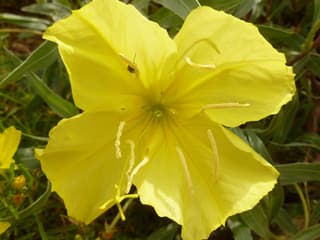
missouriensis Evening Primrose
Oenothera macrocarpa subsp. macrocarpa
Radiant yellow blooms and trailing foliage for sun-drenched rock gardens.
- Plant Type
- Perennials & Annuals
- Width
- 24 In.
- Height
- Up to 12 In.
- USDA hardiness zone
- 3 - 9
- Sun requirements
- Full Sun, Part Shade
- Water requirements
- Low
Bring your vision to life
The design images above are drag-and-drop ready — place this plant on a photo of your own yard and see it before you plant it.
Create design onlineAbout missouriensis Evening Primrose
Missouri evening primrose is a low, sprawling perennial with large lemon-yellow flowers. The [Missouri Department of Conservation](https://mdc.mo.gov/discover-nature/field-guide/missouri-evening-primrose) describes it as Oenothera macrocarpa and notes that older references called it Oenothera missouriensis; [Kew](https://powo.science.kew.org/taxon/urn:lsid:ipni.org:names:613880-1) treats the latter name as a synonym of Oenothera macrocarpa subsp. macrocarpa.
## Form and bloom
The plant reaches about 12 inches tall and spreads to roughly 2 feet across. Its solitary, saucer-shaped yellow flowers can be up to 4 inches wide and bloom from May through August. Flowers often open in late afternoon and remain open into the following morning, then last about a day.
## Where to plant
Use it in a sunny, well-drained site such as a rock garden, border, or meadow planting. In Missouri it occurs on limestone glades, bluffs, and rocky prairies; it does poorly in wet, poorly drained soil. The flowers are visited by night-feeding bees and moths, and some moth caterpillars use evening primroses as food plants.
## Maintenance
This native wildflower generally needs little care in a suitable site. Keep the soil well drained and give the plant space to sprawl. Avoid placing it where persistent wet soil may cause decline, and allow the flowers to open in the afternoon rather than expecting a morning display.