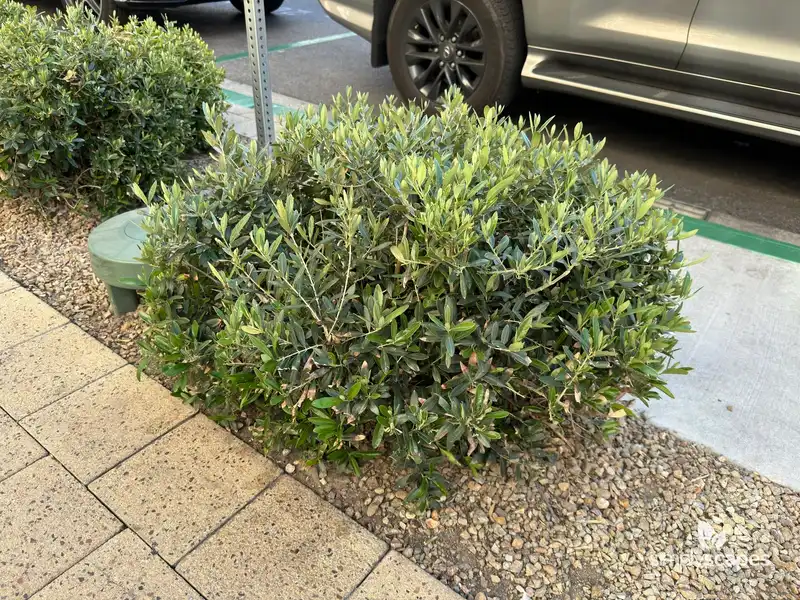
Olive Tree
Olea europaea
An evergreen Mediterranean tree with silvery leaves, fragrant summer flowers and olive fruit.
- Plant Type
- Flowering Trees
- Width
- 15-25 Ft.
- Height
- 20-30 Ft.
- USDA hardiness zone
- 8 - 10
- Sun requirements
- Full Sun
- Water requirements
- Minimal irrigation once established
- Design image count
- 10
Design images (10)


Bring your vision to life
The design images above are drag-and-drop ready — place this plant on a photo of your own yard and see it before you plant it.
Create design onlineAbout Olive Tree
The common olive (Olea europaea) is a slow-growing, broadleaf evergreen tree with a rounded crown and a trunk that becomes gnarled with age. Its narrow leathery leaves are gray-green above and silvery underneath. Small, fragrant white flowers lead to green fruits that ripen purple-black; olives are grown for edible fruit and oil as well as for their ornamental form ([Oregon State University](https://landscapeplants.oregonstate.edu/plants/olea-europaea); [North Carolina Extension Plant Toolbox](https://plants.ces.ncsu.edu/plants/olea-europaea/)).
## Form and seasonal interest
In suitable conditions this species reaches about 20–30 feet tall and 15–25 feet wide. It flowers in summer, and the fruit may be harvested green or ripe. The species profile lists USDA Zones 8–10 and notes that cultivar hardiness can vary.
## Site and care
Grow in full sun and deep, well-drained soil. Once established, the tree needs little irrigation and tolerates drought, although it performs best with warm, dry summers and mild, wetter winters. For fruit production, planting two different varieties can improve pollination and yield.
## Maintenance
Allow space for the mature canopy and keep the root zone from staying waterlogged. Select a cultivar suited to the local climate and fruiting needs; some olive cultivars produce little or no fruit or flowers.