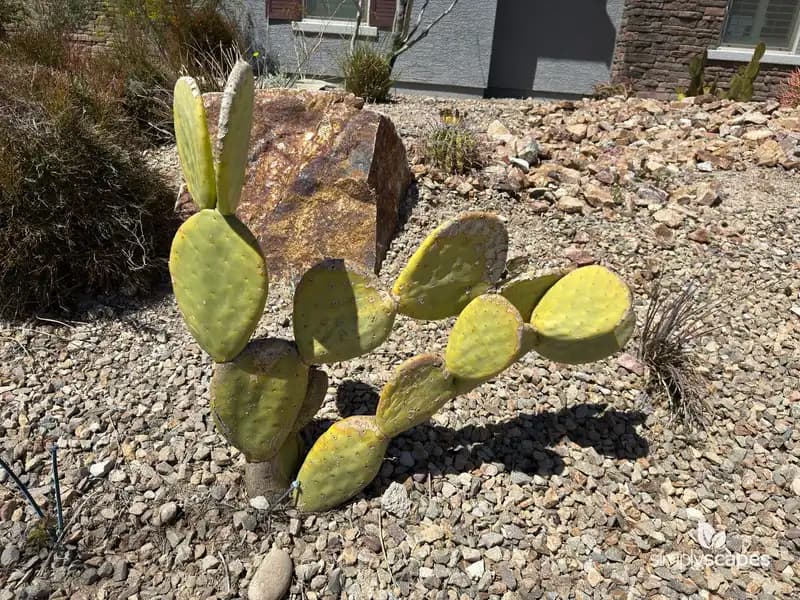
Barbary fig
Opuntia ficus-indica
The iconic, edible prickly pear cactus for sun-drenched landscapes.
- Plant Type
- Succulents
- Width
- 5-10 Ft.
- Height
- 10-15 Ft.
- USDA hardiness zone
- 8 - 12
- Sun requirements
- Full Sun
- Design image count
- 12
Design images (12)


Bring your vision to life
The design images above are drag-and-drop ready — place this plant on a photo of your own yard and see it before you plant it.
Create design onlineAbout Barbary fig
Barbary fig is a perennial succulent shrub or tree with broad, flattened pads and edible fruit. The USDA Plants Database lists Opuntia ficus-indica under the common name Barbary fig and records shrub and tree growth forms ([USDA profile](https://plants.sc.egov.usda.gov/plant-profile/OPFI)).
## Form and use
The thick, jointed pads give the plant a substantial, architectural presence. Prickly pears are grown for their pads and fruits in many regions; North Carolina State Extension’s [Opuntia guide](https://plants.ces.ncsu.edu/plants/opuntia/) explains that both may be edible after careful removal of spines and tiny glochids. Do not handle or prepare plant parts without suitable protection.
## Siting
Select a bright, sunny location with sharply draining soil. The USDA profile identifies this species as introduced in the contiguous United States, Hawaii, and Puerto Rico, so regional behavior and suitability can vary. North Carolina State Extension notes that prickly pears generally prefer full sun and good drainage and can be damaged by persistently soggy soil.
## Maintenance
Wear thick gloves and use tools when working around the pads; fine glochids can detach and irritate skin. Keep the root zone from remaining wet, and leave enough access space to manage the plant safely.