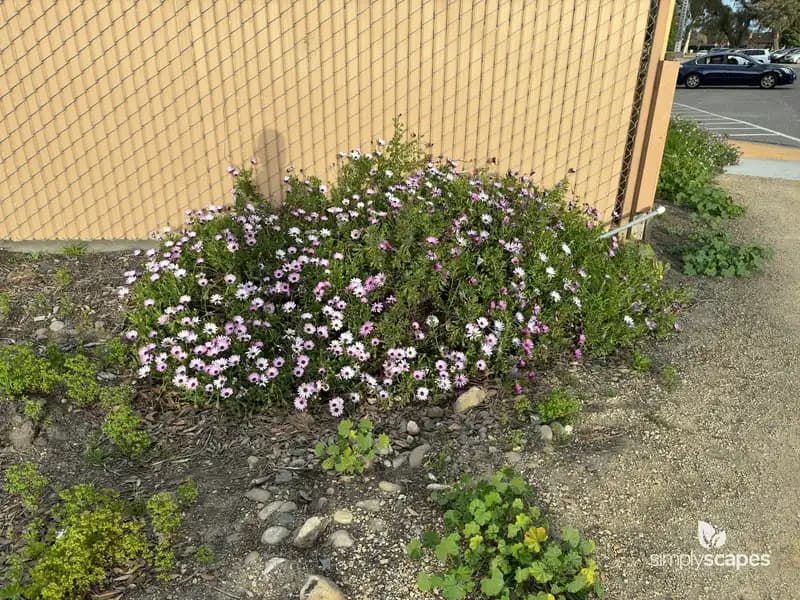
African Daisy (Osteospermum ecklonis)
Osteospermum
Vibrant, daisy-like blooms that thrive in sunny borders and containers.
- Plant Type
- Perennials & Annuals
- Width
- 12-24 In.
- Height
- 12-36 In.
- USDA hardiness zone
- 7 - 11
- Sun requirements
- Full Sun, Part Shade
- Design image count
- 3
Design images (3)


Bring your vision to life
The design images above are drag-and-drop ready — place this plant on a photo of your own yard and see it before you plant it.
Create design onlineAbout African Daisy (Osteospermum ecklonis)
Osteospermum is an accepted genus in the daisy family, Asteraceae, with a native range extending from St. Helena and northeastern Africa to southern Africa and the Arabian Peninsula. Kew describes members of the genus as annual or perennial herbs and shrubs, with varied leaf forms and flower-head arrangements ([Kew Plants of the World Online](https://powo.science.kew.org/taxon/urn:lsid:ipni.org:names:10323-1/general-information)).
## Garden use
Plants sold as African daisies include different species and named selections, so flower colors, mature size, flowering season, and winter tolerance are not uniform across the genus. Many have daisy-like flower heads and work well in seasonal borders or containers, but selection-specific information is the best guide to placement and care. Garden forms are selected for a wide range of flower shapes and shades, while foliage and growth habit also vary.
## Choosing a site
Match the plant to the identified species or selection and local climate. Check its expected mature dimensions, light preference, drainage needs, and frost tolerance before choosing a permanent planting location. Because species and selections differ, use the specific plant label to guide mature size, light, drainage, and winter protection.
## Maintenance
Follow the care guidance for the specific plant being grown. Remove spent flowers or trim growth only when the selected plant’s instructions recommend it, and protect tender forms from cold where necessary.