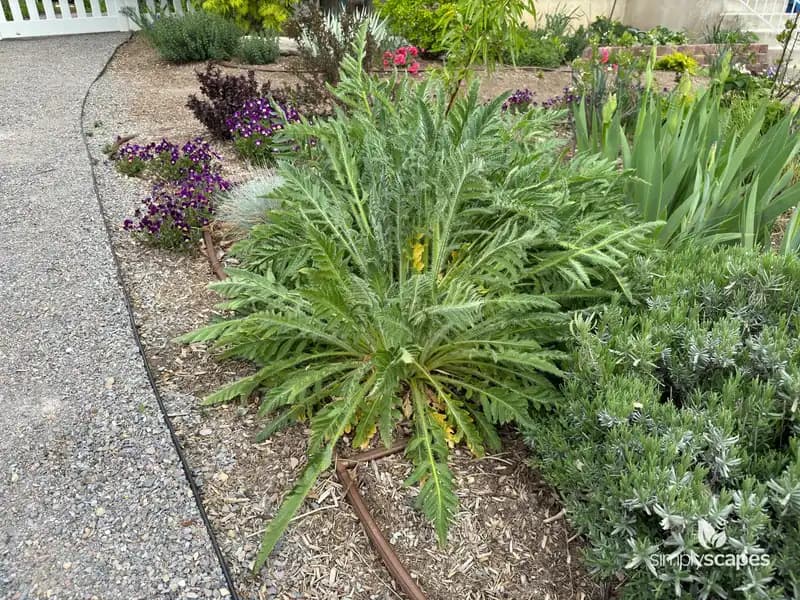
Oriental Poppy (Papaver orientale)
Papaver orientale
Vibrant, crepe-paper blooms for a dramatic late spring display.
- Plant Type
- Perennials & Annuals
- Width
- 18-24 In.
- Height
- 24-36 In.
- USDA hardiness zone
- 3 - 8
- Sun requirements
- Full Sun
- Design image count
- 1
Design images (1)

Bring your vision to life
The design images above are drag-and-drop ready — place this plant on a photo of your own yard and see it before you plant it.
Create design onlineAbout Oriental Poppy (Papaver orientale)
Oriental poppy is a clump-forming herbaceous perennial native to Central Asia, grown for its finely divided gray-green foliage and large, cup-shaped flowers. Flower colors across the species include orange, red and pink, often with dark centers; individual plants vary. [NC State Extension](https://plants.ces.ncsu.edu/plants/papaver-orientale/)
## Seasonal growth
The species flowers around June and July in North Carolina, then its foliage commonly dies back after flowering. A basal rosette may return in fall and persist through winter before the leaves grow upward again in spring. Place later-emerging perennials nearby to fill the summer gap.
## Growing conditions
Choose a sunny site with well-drained soil. Oriental poppies have a deep taproot, so avoid overwatering and provide drainage to reduce root-rot risk. NC State notes that the species generally struggles in heat and humidity and needs winter cold for good seed germination.
## Maintenance
Water while establishing, then avoid keeping the root zone saturated. Seed or root cuttings can be used for propagation, but seedlings may not retain a named flower color. The Royal Horticultural Society recommends cutting spent flower stems to the ground unless seed heads are wanted, and trimming the foliage as it fades in summer. [RHS species profile](https://www.rhs.org.uk/plants/12234/papaver-orientale/details)