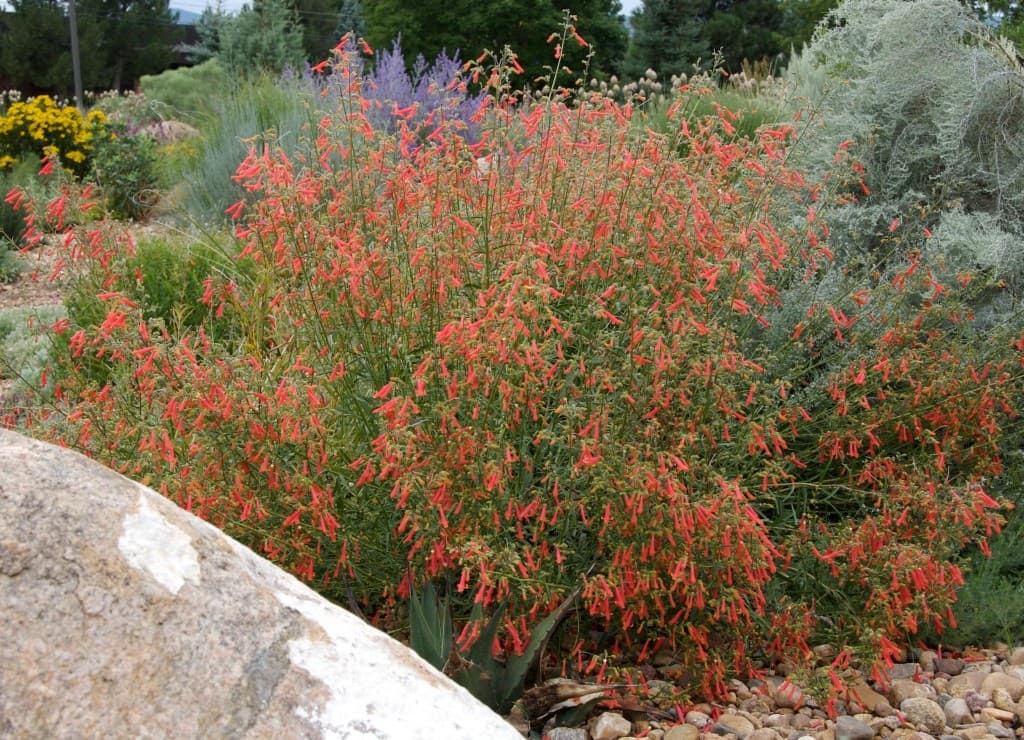
rostriflorus Beardtongue (Penstemon)
Penstemon rostriflorus Kellogg
- Plant Type
- Perennials & Annuals
- Width
- 24-30 In.
- Height
- 28-32 In.
- USDA hardiness zone
- 4
- Sun requirements
- Full Sun, Part Shade
- Water requirements
- Low
- Design image count
- 3
Design images (3)


Bring your vision to life
The design images above are drag-and-drop ready — place this plant on a photo of your own yard and see it before you plant it.
Create design onlineAbout rostriflorus Beardtongue (Penstemon)
Penstemon rostriflorus, also called Bridges penstemon, is a long-blooming western perennial with upright stems of scarlet to orange-red, beak-shaped flowers above gray-green foliage. It forms a woody-based clump and draws hummingbirds during its extended summer display. [Kew accepts the name Penstemon rostriflorus Kellogg](https://powo.science.kew.org/taxon/urn:lsid:ipni.org:names:187741-2). [Utah State University describes its form, flowering, and site needs](https://cwelwnp.usu.edu/westernnativeplants/plantlist_view.php?id=46&name=penstemonrostriflorus).
## Garden Use
Use this beardtongue in a sunny, dry border, gravel garden, or native planting with grasses and other drought-adapted perennials. Flowering is generally strongest from June into August, though local plants may continue later; Colorado State University Extension lists a June–September season and a typical 2–3-foot height.
## Growing Conditions
Provide full sun and well-drained, gravelly soil. The species is adapted to dry western habitats and has low tolerance for persistently wet roots. Its height varies by site: Utah State reports plants averaging about 16 inches in the wild, with some exceeding 36 inches, so allow room for natural variation.
## Maintenance
Keep fertility modest and avoid overwatering. Remove spent flower stems if you want to encourage additional bloom, and remove old fruiting stalks when their persistent seed pods no longer suit the planting.