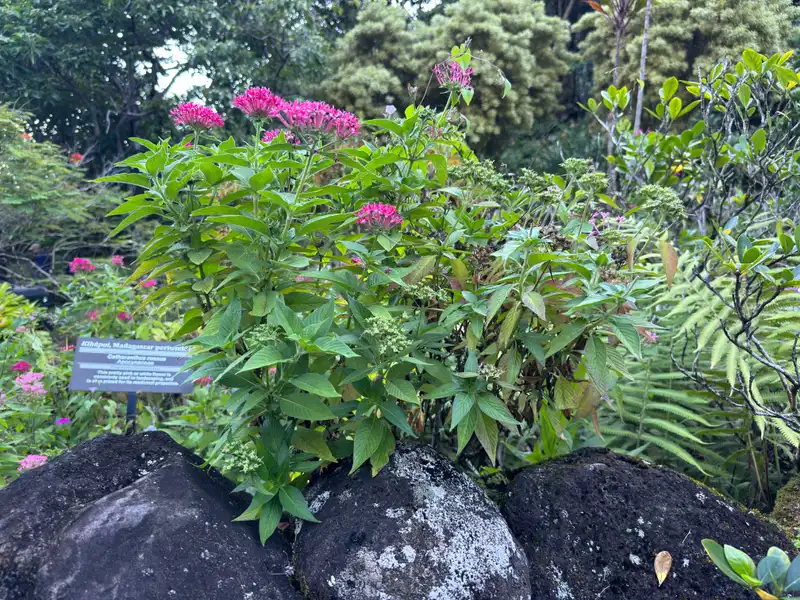
Egyptian Star Cluster
Pentas lanceolata
- Plant Type
- Perennials & Annuals
- Width
- 9–24 In.
- Height
- 12–24 In.
- USDA hardiness zone
- 10 - 11
- Sun requirements
- Full Sun, Part Shade
- Water requirements
- Medium
- Design image count
- 1
Design images (1)

Bring your vision to life
The design images above are drag-and-drop ready — place this plant on a photo of your own yard and see it before you plant it.
Create design onlineAbout Egyptian Star Cluster
Egyptian star cluster is a tropical, woody-based perennial or subshrub, grown as a perennial in frost-free climates and often as an annual or container plant where winters are cold. It bears dense clusters of small, tubular, star-shaped flowers in several colors, and the flowers attract butterflies and hummingbirds.
## Garden Character
This species has glossy, lance-shaped green leaves and a bushy to spreading habit. NC State Extension gives a typical garden size of roughly 1–2 feet tall and 9 inches to 2 feet wide, while noting that plants can grow taller in their native range. Flower clusters may appear from spring into fall; color varies among forms and cultivars. The [NC State Extension profile](https://plants.ces.ncsu.edu/plants/pentas-lanceolata/common-name/egyptian-star-cluster/) and [RHS profile](https://www.rhs.org.uk/plants/80589/pentas-lanceolata/details) describe the species and its broad variation.
## Growing Conditions
Plant in full sun for abundant bloom, though partial shade is tolerated. Pentas grows best in organically rich, well-drained soil with consistent moisture; water thoroughly, then allow excess water to drain and the soil surface to begin drying. In regions with freezing winters, grow it as a warm-season annual or in a container that can be moved indoors. The USDA hardiness guidance from NC State lists zones 10a–11b.
## Maintenance
Keep moisture steady during active growth, especially in containers and hot weather. Remove faded flower clusters when a neat appearance is desired. Monitor for aphids, spider mites, and caterpillars, which can affect foliage.