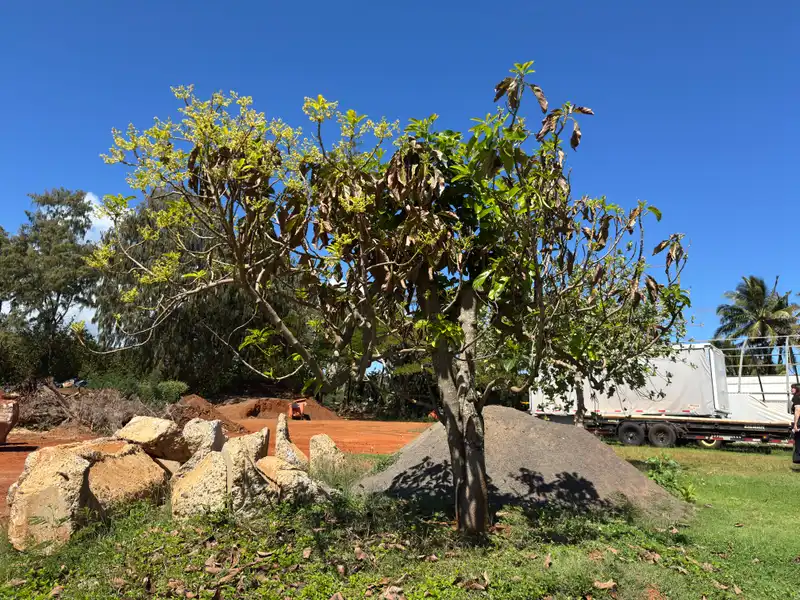
Avocado Tree
Persea americana
The iconic tropical tree for creamy, homegrown fruit.
- Plant Type
- Edible Plants
- Width
- 20-30 Ft.
- Height
- 30-60 Ft.
- USDA hardiness zone
- 9 - 11
- Sun requirements
- Full Sun, Part Shade
- Design image count
- 2
Design images (2)


Bring your vision to life
The design images above are drag-and-drop ready — place this plant on a photo of your own yard and see it before you plant it.
Create design onlineAbout Avocado Tree
Avocado is a broad-canopied evergreen tree grown for its pear-shaped fruit and as a shade or specimen tree in warm climates. It is native to tropical America, flowers from late winter into early spring, and needs a frost-protected site where it can reach substantial size. [UF/IFAS](https://ask.ifas.ufl.edu/publication/ST435)
## Growing conditions
Give the tree full sun and ample room for its mature canopy. The species is listed for USDA zones 9B–11; colder locations need frost protection or protected cultivation. Its fragrant, inconspicuous flowers appear in clusters, and fruit varies in skin texture and color as it ripens. [UF/IFAS](https://ask.ifas.ufl.edu/publication/ST435)
## Uses
Use it as a fruit tree, shade tree, or specimen where the climate and space allow. Mature size and fruiting depend on site and cultivation, so allow room for a large evergreen tree.
## Maintenance
Protect from frost and provide enough space for the canopy. Consult local extension guidance for pruning and cultivar-specific fruiting needs.
## New Zealand — FENZ Moderate flammability
The [Fire and Emergency New Zealand plant directory](https://www.checkitsalright.nz/reduce-your-risk/low-flammability-plants) lists Persea americana / Avocado in its Moderate flammability band (source entry 348). The entry is in the main plant directory, which includes the full range of flammability bands; presence there alone is not a planting recommendation. FENZ advises considering removal or relocation of moderate-to-high flammability vegetation where practical, following local rules; otherwise manage separation, lower branches and dead material.
This matches the printed unselected botanical identity. The source does not establish separate testing of every cultivar or regional form. Its bands describe flammability: higher means more flammable, unlike the numerical Idaho resistance scale. Plant condition, site and maintenance affect performance. Keep plants appropriately watered, remove dry material and maintain breaks in vegetation; low flammability is not fireproof. Keep other regional classifications separate.