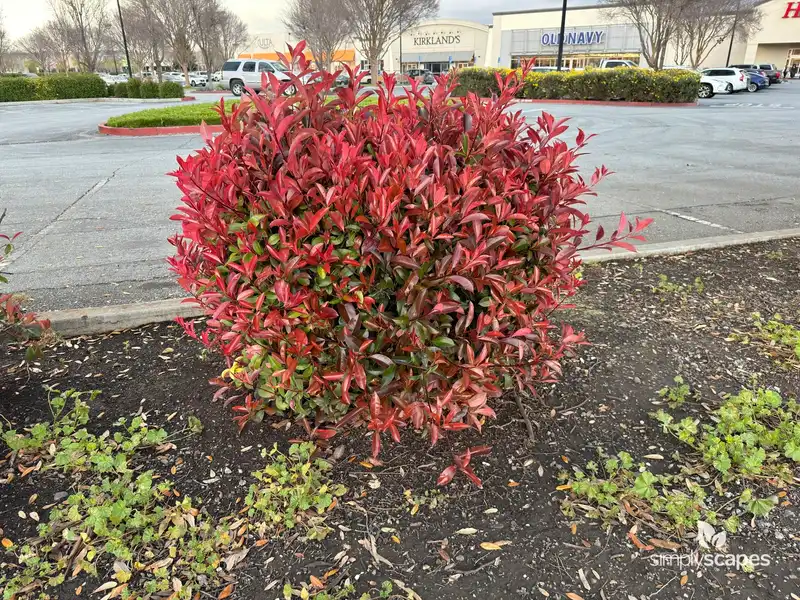
Chinese Photinia
Photinia serratifolia
A robust evergreen with glossy foliage and vibrant red new growth.
- Plant Type
- Shrubs & Roses
- Width
- 15-25 Ft.
- Height
- 20-35 Ft.
- USDA hardiness zone
- 7 - 9
- Sun requirements
- Full Sun, Part Shade
- Water requirements
- Medium
- Design image count
- 16
Design images (16)


Bring your vision to life
The design images above are drag-and-drop ready — place this plant on a photo of your own yard and see it before you plant it.
Create design onlineAbout Chinese Photinia
Chinese photinia is a large broadleaf evergreen shrub or small tree with glossy, finely toothed leaves, red young growth, spring flower clusters, and persistent fruit. Give it room to mature: sources describe plants that can become substantial trees, so it is better suited to spacious gardens than tight foundation strips. [North Carolina State Extension](https://plants.ces.ncsu.edu/plants/photinia-serratifolia/common-name/oriental-photinia/) and the [Royal Horticultural Society](https://www.rhs.org.uk/plants/82748/photinia-serratifolia/details) describe the species and its garden traits.
## Appearance and placement
The leathery foliage is dark green as it matures, while new leaves emerge red. Small white flowers appear in flattened clusters in spring; red fruits later darken and can persist into winter. Use it as a specimen, large screen, or hedge only where its mature spread can be accommodated. It grows in full sun or partial shade, and its flowers may have an unpleasant scent to some people.
## Growing conditions
Choose fertile soil with good drainage and provide good air circulation. Established plants tolerate some drought, but avoid persistently wet soil. The species is reported hardy to USDA Zone 7; local exposure and winter conditions still matter.
## Maintenance
Prune in winter to thin crowded growth and improve air circulation. Avoid routine hard shaping that removes too much flowering wood. Young shoots can be damaged by late frost; protect new plantings in exposed sites and water during prolonged dry weather.